

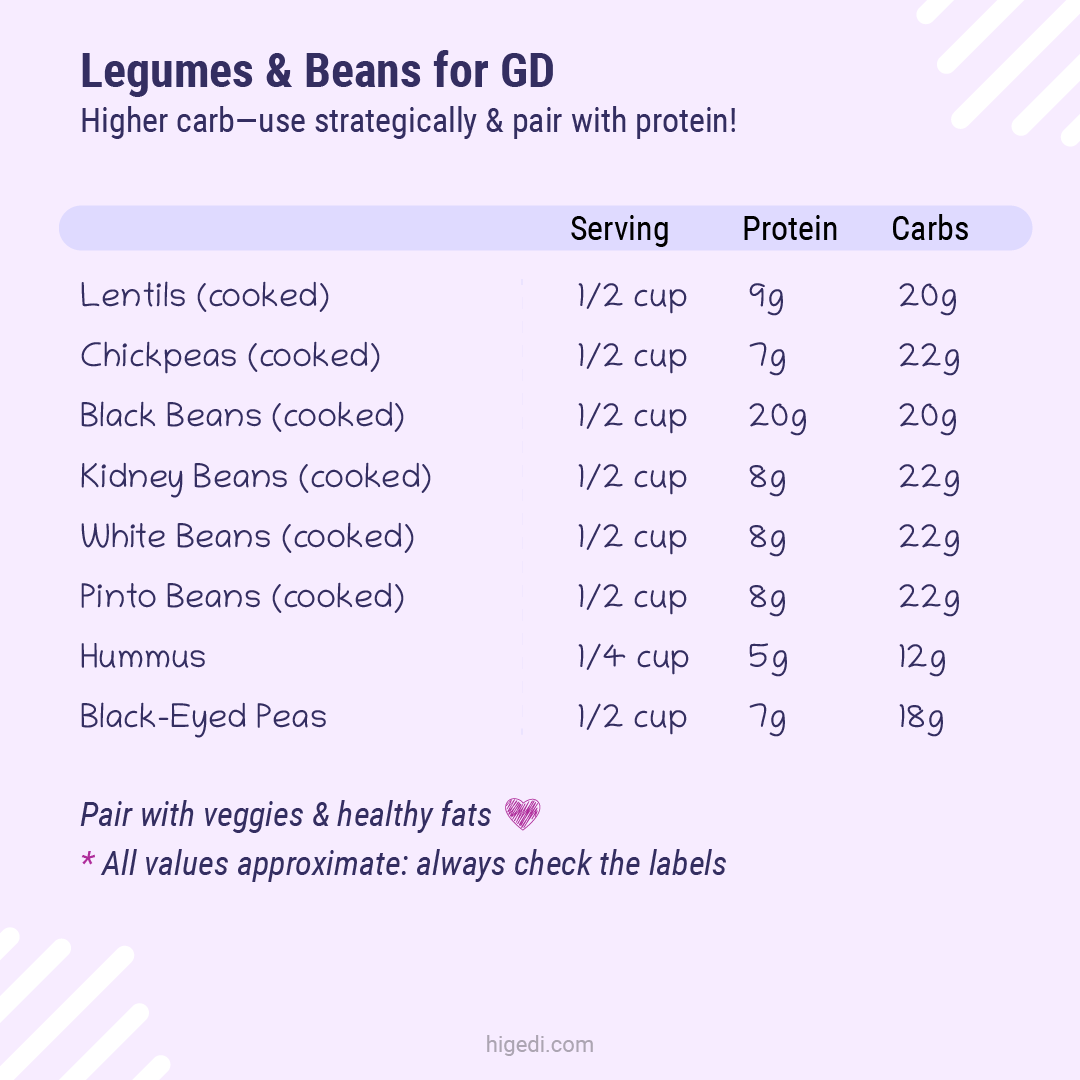
Can you eat beans and legumes with gestational diabetes? Yes—but strategically.
Understanding Legumes & Beans with GD
Legumes and beans are higher in carbs than other protein sources, but they're also packed with fiber and plant-based protein, which can help stabilize blood sugar when eaten the right way.
The key is understanding how to use them. You don't have to avoid beans completely—you just need to be intentional about portions, timing, and what you pair them with.
How to Use Legumes & Beans
Stick to 1/2 cup portions (measure it!). This gives you the protein and fiber benefits without overwhelming your system with carbs.
Pair with non-starchy vegetables (spinach, broccoli, peppers, zucchini) and healthy fats (olive oil, avocado, nuts). This combination slows digestion and prevents blood sugar spikes.
Eat them at lunch or dinner rather than breakfast. Morning insulin resistance is real for many GD mamas, so breakfast is generally not the best time for higher-carb foods like beans.
Pro Tips for Success
Hummus is a great way to enjoy chickpeas in a controlled portion. 1/4 cup of hummus with veggies makes a satisfying snack without spiking your blood sugar.
Lentils are often better tolerated than larger beans because they cook faster and have a different fiber structure. Red lentils tend to be gentler on digestion than green or brown lentils.
Always rinse canned beans thoroughly to remove excess sodium and some of the carbs. Dried beans that you cook yourself are often better tolerated than canned.
Testing What Works for You
Most importantly, test your blood sugar to see how YOUR body responds. Some mamas do great with lentils and chickpeas. Others spike significantly. The key is finding what works for you through testing and tracking.
Use this guide as a reference, but remember that your individual response matters most.