

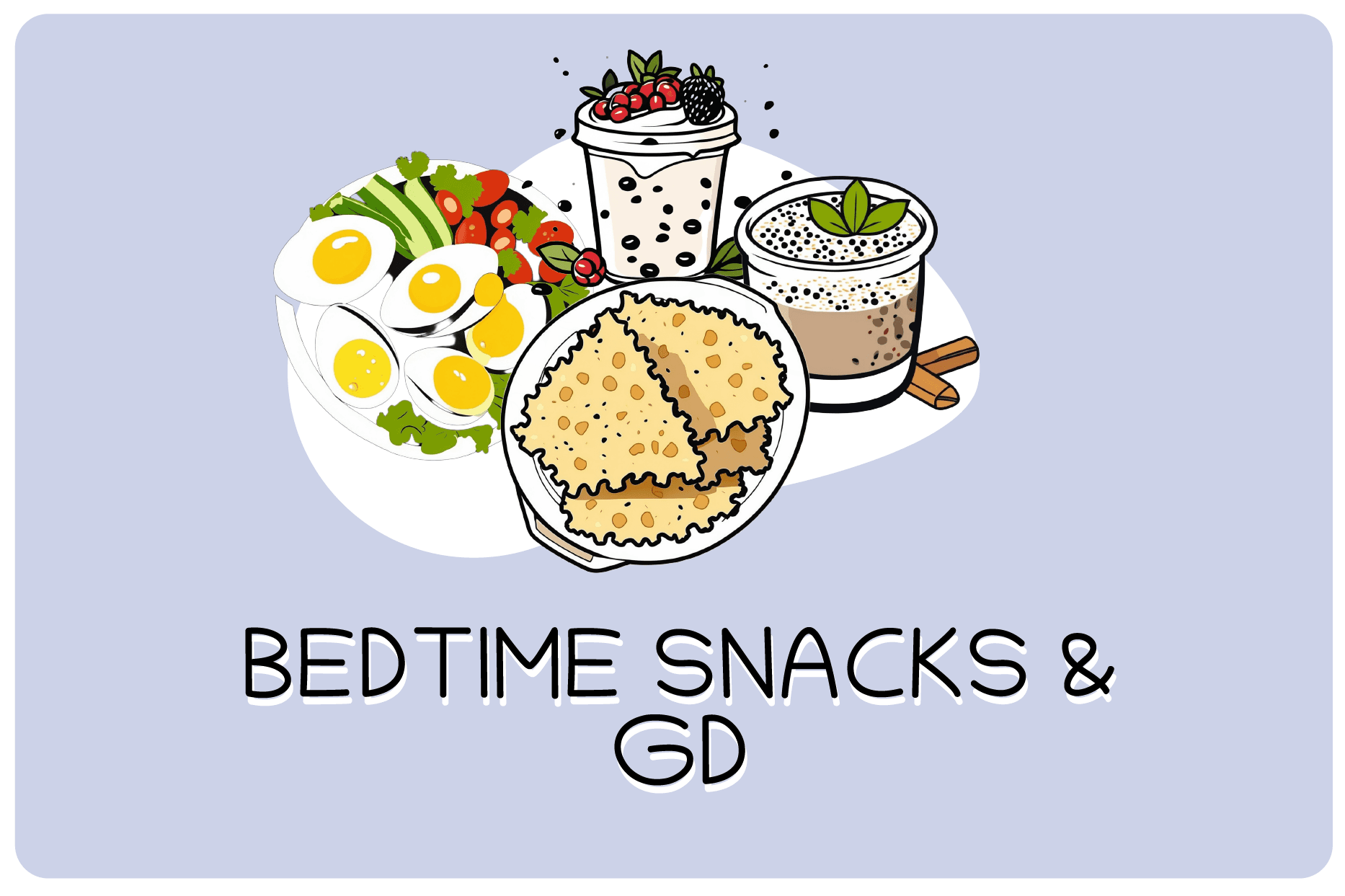
If you’re managing gestational diabetes, one of the biggest challenges can be keeping fasting blood sugar levels stable overnight. A well-balanced bedtime snack can help prevent morning spikes, curb overnight glucose production, and support both maternal and fetal health.
In this guide, we’ll cover:
Why do bedtime snacks matter for gestational diabetes
27 easy, nutritious snack ideas categorized by your body's needs
Foods to avoid before bed
Additional strategies to help lower fasting blood sugar levels
A healthy bedtime snack plays a crucial role in blood sugar management, especially when dealing with fasting blood glucose levels, which can be one of the hardest aspects of gestational diabetes to control.
Here’s why a bedtime snack helps:
✔ Prevents morning blood sugar spikes – Some people experience dawn phenomenon, where blood sugar rises overnight due to hormonal shifts. A balanced snack can help counteract this and stabilize blood sugar.
✔ Reduces overnight glucose production – When you go too long without eating, the liver releases extra glucose, leading to higher fasting numbers in the morning. A snack with protein and healthy fats slows this process.
✔ Prevents overnight hypoglycemia – Some experience low blood sugar at night, which can trigger the liver to release glucose, causing a rebound high in the morning. A well-balanced snack helps keep levels steady.
✔ Supports maternal and fetal health – Nutrient-dense snacks ensure you’re getting enough protein, healthy fats, and essential vitamins during pregnancy.
The best bedtime snacks for gestational diabetes include a combination of protein, healthy fats, and fiber-rich complex carbs to slow glucose absorption and provide steady energy.
Focus on:
Protein – Slows digestion and stabilizes blood sugar (Greek yogurt, eggs, nuts)
Healthy fats – Help slow glucose absorption (avocados, nut butters, seeds)
Fiber-rich carbs – Provide steady energy without sharp spikes (berries, whole grains)
Avoid:
Sugary cereals, granola bars, and pastries
Juice or sweetened beverages
White bread, white rice, or regular pasta
Candy and highly processed snacks
Saying this, everyone's body responds differently to food. Some people need to include more carbs, while others do better with higher protein, and some find that a balanced mix works best.
Figuring out the right bedtime snack for your body is mostly a process of trial and error. Everyone responds differently to food, so it takes some experimenting to find what helps stabilize your blood sugar overnight. However, one day isn’t enough to determine if a snack is working or not. If you try a protein-centered snack and don’t see much improvement in your fasting numbers, it’s not necessarily a sign to switch straight to a carb-centered snack the next day. Our bodies need time to adapt, so give each type of snack a few nights before deciding whether it’s the right fit. Track your morning blood sugar levels, note how you feel, and make small adjustments as needed to find the best balance for your body. This trial-and-error process can feel lonely, but you don't have to do it alone. In the HIgedi app, you can see what bedtime snacks are actually working for other GD moms—with their blood sugar results included.
Here are 27 bedtime snack ideas for gestational diabetes diet based on your individual needs:
If your fasting blood sugar tends to drop too low overnight, you may need a higher-carb snack to maintain stable levels.

Try these options:
Baked Apple with Pecans & Cinnamon – A warm, naturally sweet option with fiber and healthy fats.
Apple Slices with Almond Butter – A delicious mix of fiber, protein, and healthy fats.
Peanut Butter on Whole Grain Toast – Slow-digesting carbs paired with healthy fats and protein.
Hummus with Whole Grain Crackers – A great mix of complex carbs and plant-based protein.
Whole Grain Rice Cake with Peanut Butter & Sliced Strawberries – A crunchy, satisfying carb-balanced snack.
Homemade Trail Mix (Pumpkin Seeds, Nuts, Dried Berries & Dark Chocolate Chips) – A mix of slow-digesting carbs and healthy fats.
Chia Pudding with Unsweetened Almond Milk & Cinnamon – High in fiber and omega-3s, providing steady energy.
Roasted Chickpeas with a Sprinkle of Sea Salt & Paprika – A crunchy, protein-and-carb combo.
Roasted Sweet Potato with Almond Butter – A filling, satisfying snack with protein, fiber, and carbs.
If you struggle with blood sugar spikes, a higher-protein snack can help slow glucose absorption.

Try these options:
Hard-Boiled Eggs with Raw Veggies – Packed with protein, iron, and B12 for a satisfying snack.
Parmesan Crisps with No-Sugar Added Dip (e.g., Marinara) – Crunchy, savory, and satisfying with protein and healthy fats, paired with a low-sugar dip for extra flavor.
Cottage Cheese with Almond Butter, Cinnamon, Vanilla extract & Cocoa Powder – A creamy, protein-rich snack with healthy fats and a touch of sweetness.
Cottage Cheese with a Spoonful of Peanut Butter – A creamy and high-protein mix.
Greek Yogurt with Chopped Nuts – High in protein and probiotics, perfect for digestion and blood sugar control.
Greek Yogurt with Hemp Seeds & Flaxseeds – A triple dose of protein and healthy fats.
Tuna Salad Lettuce Wraps – A filling, low-carb snack with healthy fats and protein.
Canned Tuna & Cream Cheese on Celery Sticks – A convenient, protein-rich snack option. Be mindful of recommended intake during pregnancy.
Salmon & Cream Cheese on Cucumber Slices – A high-protein, low-carb option.
Grilled Chicken Strips with Guacamole – A simple yet effective snack for keeping blood sugar steady.
If you find that a combination of protein and complex carbs works best, these snacks offer the perfect balance.

Try these options:
Whole Grain Crackers or Popcorn with Cheese – A steady energy source that helps regulate blood sugar.
Coconut Yogurt with Chopped Nuts – A dairy-free option packed with good fats and probiotics.
Greek Yogurt with Berries & Chia Seeds – A perfect blend of protein, fiber, and slow-digesting carbs.
Cottage Cheese with Low-GI Fruit & Cinnamon – A balance of protein and slow-digesting carbs for sustained energy. You can read more about the best fruits for gestational diabetes and which to avoid in our blog.
Cottage Cheese with Peach Chunks & Chia Seeds – A mix of dairy protein, natural fruit sugars, and fiber.
Protein Smoothie (Coconut Milk or Almond Milk, Protein Powder & Berries) – A blood sugar-friendly drink to support stable overnight levels.
Avocado Toast with a Hard-Boiled Egg – A well-rounded option with fiber, protein, and healthy fats.
Whole Grain Bread with Nut Butter and Berries – A perfect blend of protein, fiber, and slow-digesting carbs.
Hummus with Carrot Sticks & Cheese Crisps – A fiber-rich and protein-packed snack.
Edamame with Sea Salt – A fiber and protein-rich plant-based option.
Fasting blood sugar is often one of the hardest numbers to manage because it’s largely influenced by hormones. While lifestyle changes can help, it's completely okay to seek medication if needed—it’s all part of taking care of your health.
In the meantime, here are a few practical tips to help lower fasting blood sugar naturally:
Some people need more carbs, while others may do better with more protein or a balanced mix. Experiment with different snacks to see what works best for you.
Fasting too long (more than 8–10 hours) can trigger the liver to release more glucose, leading to higher fasting numbers. Try adjusting your eating window and see if it helps.
A light walk or gentle movement after dinner can help lower blood sugar before you start your fasting period. It also supports digestion and reduces stress, which can impact blood sugar levels.
Stress and poor sleep can lead to higher fasting blood sugar. Try:
A short meditation session before bed
Taking magnesium glycinate to help with relaxation and sleep quality
Proper hydration helps your body regulate blood sugar and keeps you feeling your best. Aim to drink plenty of water throughout the day to support glucose control.
A well-balanced bedtime snack plays a key role in stabilizing blood sugar overnight, preventing morning spikes, and supporting a healthy pregnancy. Incorporating gestational diabetes snacks into your diet is crucial for managing blood sugar levels during pregnancy. These nutrient-dense snacks help prevent spikes in blood glucose levels and support the health of both the mother and baby. While finding the right snack may take some trial and error, consistency and mindful choices can make a significant difference.
✔ Eat your bedtime snack 8–10 hours before checking your fasting blood sugar.
✔ Experiment with different snack combinations, but give your body time to adjust before switching.
✔ Avoid refined carbs and sugary foods that can cause blood sugar spikes and increase the risk of overnight blood sugar fluctuations.
✔ Remember that fasting blood sugar is largely influenced by hormones—your bedtime snack is just one piece of the puzzle. A well-balanced bedtime snack plays a key role in stabilizing blood sugar overnight. But you don't have to figure this out alone.
Join the free HIgedi app to see what bedtime snacks are working for thousands of moms managing gestational diabetes.
1. Why is a bedtime snack important for gestational diabetes?
Here's the thing: your liver doesn't sleep when you do. When you go too long without food, it panics and dumps extra glucose into your bloodstream—which is why so many of us wake up to frustratingly high fasting numbers. A bedtime snack is like giving your body a gentle "I've got this" message overnight. It keeps your blood sugar steady, prevents your liver from overreacting, and helps you wake up to better numbers. And yes, it generally does help.
2. What should I avoid eating before bed with gestational diabetes?
Skip anything that spikes fast: refined carbs, sugary snacks, white bread, cookies, fruit juices, and sodas. These hit your bloodstream quickly and can mess with your numbers overnight. Basically, if it tastes like dessert and isn't paired with protein or healthy fats, save it for daytime (or skip it altogether). Your fasting numbers will thank you.
3. When should I eat my bedtime snack for gestational diabetes?
Aim for about 8-10 hours before you check your fasting number in the morning. This gives your body time to process the snack without your liver getting confused and releasing extra glucose. Timing matters, but don't stress if it's not exact—just aim for that window and see what works for your body.
4. Can I skip a bedtime snack if I have gestational diabetes?
It depends on your body. Some moms find that skipping a snack causes their fasting numbers to spike (hello, liver overreaction). Others do fine without one. The only way to know? Track your numbers and see what happens. If your fasting levels are consistently high, try adding a snack for a few nights and see if it helps. Trust your body—it knows what it needs.
5. How do I know what kind of bedtime snack my body needs?
Finding the right bedtime snack is a trial-and-error process. Stick with one type of snack (protein-focused, carb-balanced, or fat-rich) for a few nights in a row before switching. This allows your body to adapt and helps you identify patterns in your blood sugar response.
6. Can a bedtime snack lower my fasting blood sugar levels?
Yes—but it's not magic. The right snack can definitely help regulate your overnight blood sugar. But here's the reality: fasting numbers are also affected by hormones, stress, sleep quality, and everything else you ate that day. So if your bedtime snack isn't solving the problem alone, that's completely normal. It's just one piece of the puzzle. Sometimes you need the snack plus movement, better sleep, or even medication. And that's okay.
Managing gestational diabetes can feel overwhelming, but small changes—like choosing the right snacks and adjusting your routine—can make a big difference. Finding what works best for you takes patience, but every small step contributes to better blood sugar control and a healthier pregnancy. And remember, it’s okay to reach out for additional support if needed.
Disclaimer: This content is for educational purposes only and is not medical advice. Always consult your healthcare provider before making changes to your diet or diabetes management plan. Every pregnancy is unique, and your provider can give you personalized guidance based on your specific situation.
Get a Free 20-Day Shopping List