

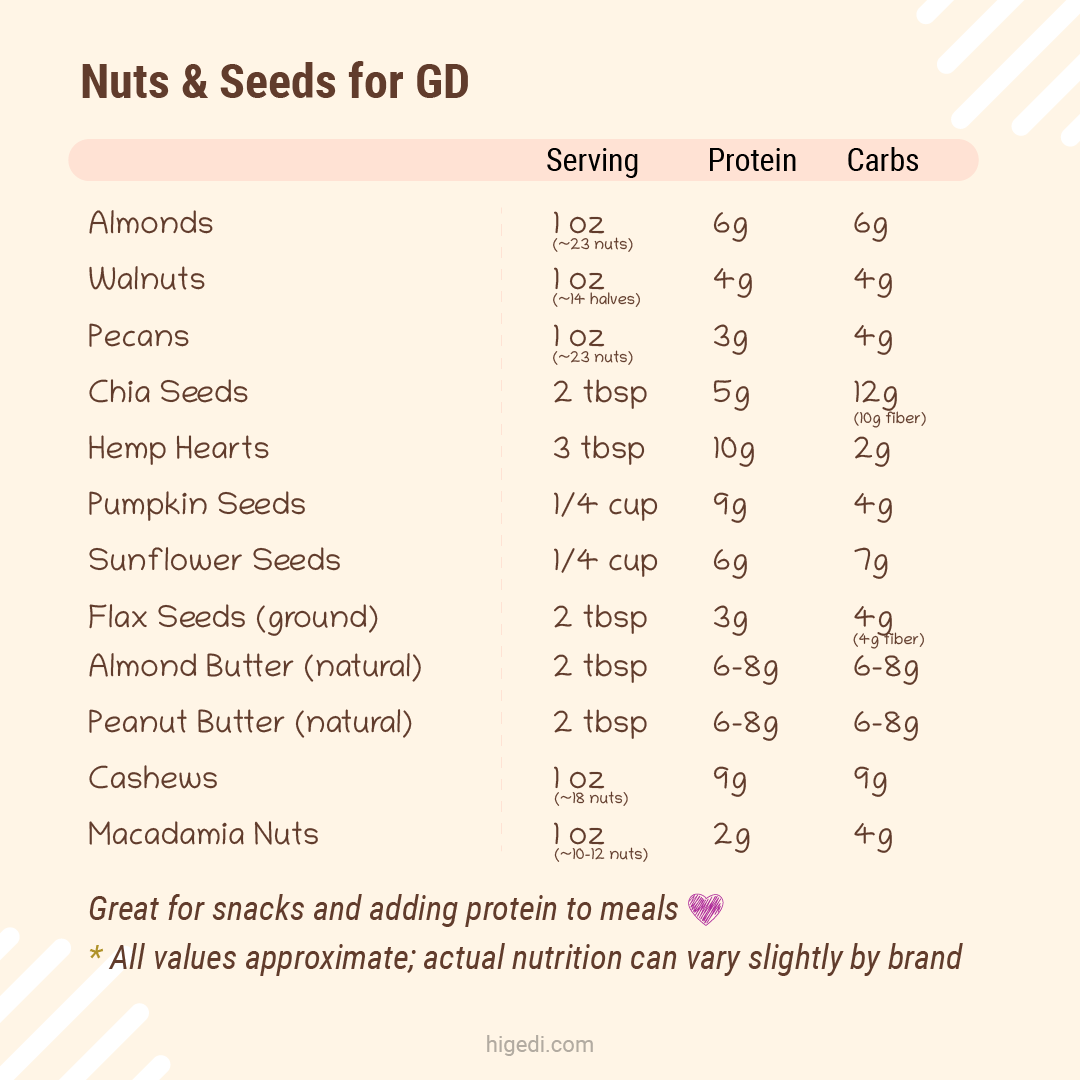
Nuts and seeds are gestational diabetes superstars. They're high in protein, packed with healthy fats, and low in carbs—making them perfect for snacks, toppings, and keeping you full between meals.
Why Nuts & Seeds Matter for GD
Managing blood sugar with gestational diabetes means finding foods that satisfy you without causing spikes. Nuts and seeds do exactly that. The combination of protein, healthy fats, and fiber means they digest slowly, providing sustained energy and stable blood sugar levels.
A handful of almonds or a spoonful of almond butter won't spike your blood sugar the way a carb-heavy snack would. Instead, you get steady energy that keeps you satisfied for hours.
How to Use Nuts & Seeds
Nuts and seeds are incredibly versatile. You can enjoy them as a standalone snack, sprinkle them on yogurt or cottage cheese, add them to salads, use them as a coating for baked chicken or fish, or blend them into nut butters. A small handful (about 1 ounce) makes a satisfying snack that keeps you full for hours.
The key is watching portions. While nuts are healthy, they're also calorie-dense, so measuring out your serving helps you stay on track.
Best Times to Eat Nuts & Seeds
Nuts and seeds work especially well as:
Mid-morning or afternoon snacks (when you need a blood sugar boost without a spike)
Breakfast toppings (on yogurt, cottage cheese, or in smoothies to add protein and slow carb absorption)
Part of balanced meals (with veggies and lean protein for complete nutrition)
Pro Tips
Chia seeds and flax seeds are especially high in fiber, which helps with blood sugar control and digestion. Just make sure to drink plenty of water when eating them—they absorb liquid and can cause discomfort if you're dehydrated.
Hemp hearts are one of our personal favorites because they have the highest protein content (10g per 3 tbsp) with minimal carbs. They're also a complete protein, meaning they contain all essential amino acids your body needs.