

If you’re thinking, “Wait… was my gestational diabetes diagnosis a mistake?” — you’re not alone. A lot of mamas wonder this, especially when their at-home numbers look totally fine.
Here’s the gentle truth: most of the time, it’s not that you were “misdiagnosed.” It’s that the test is… intense.
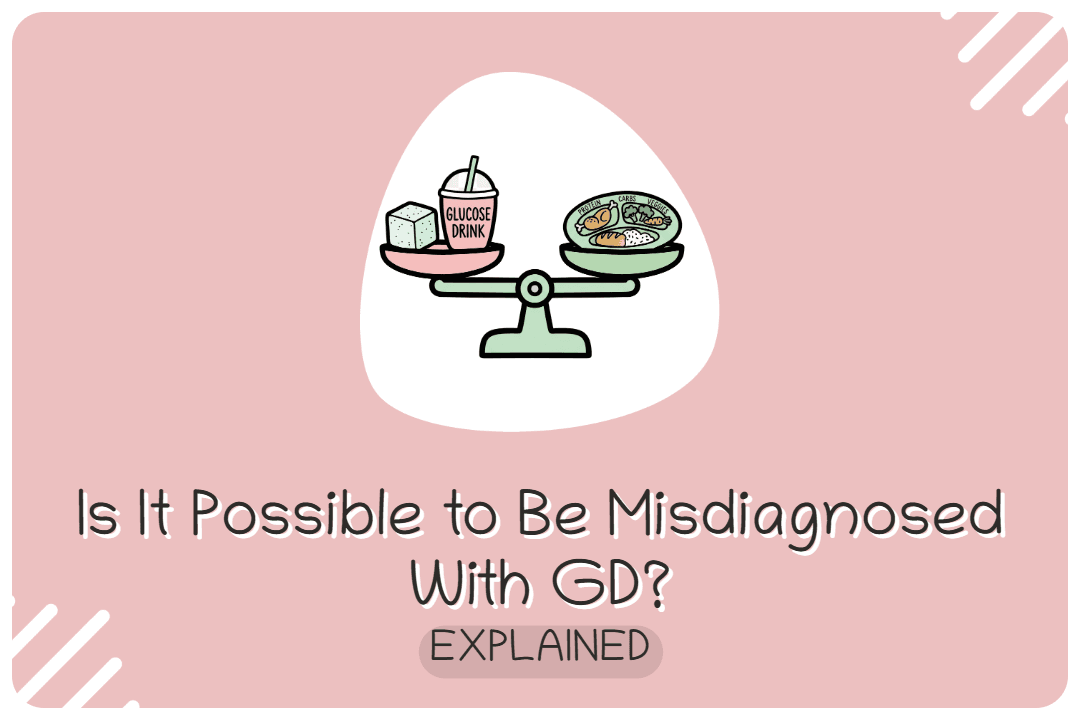
The oral glucose tolerance test (OGTT) is designed to stress-test how your body handles glucose during pregnancy.
You’re basically drinking a large dose of pure glucose on an empty stomach — with no protein, fat, or fiber to slow it down.
In real life, most of us don’t eat the equivalent of that drink by itself (and definitely not in 5 minutes). So the OGTT is meant to “unmask” even mild glucose intolerance that might not show up with normal, balanced meals.
Julija notes: If the test felt unreal… it kind of is. That’s the point.
Technically, yes — no test is perfect. But in practice, what most mamas call a “false positive” is usually one of these:
You have a milder/diet-controlled form of GD (and your body handles balanced meals well)
Your body reacted strongly to the test conditions (fasting + pure glucose + pregnancy hormones)
Your glucose tolerance is borderline — not obvious day-to-day, but still worth monitoring in pregnancy
And that’s why providers take OGTT results seriously: pregnancy is a unique metabolic situation.
This is one of the most confusing parts.
If you’re eating meals that include protein, fat, and fiber, your blood sugar may stay beautifully in range — even if you failed the OGTT.
That doesn’t mean the diagnosis is wrong.
It can simply mean:
Your GD is mild
Your usual eating pattern is already GD-friendly
You’re earlier in pregnancy and hormones haven’t peaked yet
Take it as a win. Seriously.
Often it means exactly this: you may have a milder/diet-controlled case.
That’s not “nothing.” It’s still useful information — because it tells you your body can handle pregnancy glucose demands right now, under normal conditions.
But it also means it’s smart to keep monitoring for a while, because insulin resistance often increases as pregnancy progresses (especially in the late second and third trimester).
Not saying it will change for you — just that it can, and that’s why the monitoring matters.
If you’re feeling stuck in the “was this a mistake?” loop, here’s a calmer way to approach it.
Your readings aren’t a grade. They’re feedback.
If your provider asked you to test, follow that plan for the period they recommended.
Many mamas see shifts later — and catching those shifts early is the whole point of the diagnosis.
Depending on where you live, diagnosis criteria can vary:
1-step OGTT (75g)
2-step screening + 3-hour test (50g + 100g)
Different cutoffs
It’s okay to ask:
Which value(s) were out of range?
By how much?
What targets do you want me to follow at home?
Even if your numbers are fine, the safest approach is still:
Pair carbs with protein (and ideally fat + fiber)
Avoid “naked carbs” most of the time
Don’t go ultra low-carb (you and baby still need carbs)
If you’re newly diagnosed (+ overwhelmed) and need a helpful place to start, this might be handy (GD basics, testing and targets, meal and snack ideas, etc.): Gestational Diabetes Toolkit (from newly diagnosed to postpartum)
A few situations where it’s especially important not to dismiss the diagnosis:
You’re trending higher over time (even if still “mostly” in range)
Fasting numbers are creeping up
You’re later in pregnancy (hormones ramp up)
You have other risk factors (previous GD, PCOS, family history, etc.)
Again: this isn’t to scare you. It’s to keep you and baby safe.
It’s incredibly common to wonder if you had a “false positive” OGTT — especially if your home numbers are fine.
But most of the time, it’s not misdiagnosis. It’s that the OGTT is designed to be a stress test that reveals even mild glucose intolerance.
So if your numbers are in range without major changes? Take the win.
Just keep monitoring for now, because pregnancy hormones can shift things later — and if they do, you’ll catch it early.
1. Can gestational diabetes be misdiagnosed?
It’s possible for any test to be imperfect, but most “misdiagnosis” concerns come from the fact that the OGTT is a very artificial, high-sugar challenge. Many people who fail it still have normal readings with balanced meals — which often means a mild/diet-controlled case.
2. Why did I fail the glucose test but my numbers at home are normal?
Home meals typically include protein, fat, and fiber, which slow glucose absorption. The OGTT is pure glucose on an empty stomach, so it can reveal mild glucose intolerance that doesn’t show up with everyday eating.
3. Should I stop testing if my numbers are always in range?
Follow your provider’s plan. Many mamas stay in range throughout pregnancy, but insulin resistance can increase later, so monitoring helps catch changes early.
4. Does failing the OGTT mean I’ll definitely need insulin?
No. Many mamas stay diet-controlled. If medication is recommended later, it’s not a failure — it’s hormones — and it’s a tool to keep you and baby safe.
Get a Free 20-Day Shopping List