

If I had a pound for every time I’ve heard that question inside the HIgedi community, I’d probably be writing this from a tropical island.
Breakfast is one of the biggest challenges after a gestational diabetes diagnosis.
One day eggs sound fine. The next day you can’t even look at them. Oatmeal works for some pregnant women, but not for others. Toast on its own usually isn’t enough. Fruit suddenly feels confusing. And before long, breakfast starts feeling repetitive, restrictive, and honestly… a little stressful.
If that sounds familiar, you’re definitely not alone. The good news? Breakfast with gestational diabetes doesn’t have to mean eating eggs every single morning—or avoiding carbohydrates (remember: you and baby need carbs!).
This guide brings together my favourite (hi, Julija here!) high-protein breakfast gestational diabetes ideas that are satisfying, practical, and designed to support healthy blood sugar levels. Whether you’re looking for something sweet, savoury, meal-prep friendly, or quick enough for busy weekday mornings, you’ll find plenty of inspiration here.
One of the first things many women notice after being diagnosed with gestational diabetes is that breakfast seems to spike their blood sugar more easily than lunch or dinner.
That’s not your imagination.
During the early morning hours, our bodies naturally produce hormones—including cortisol and growth hormone—that increase insulin resistance. This is sometimes referred to as the dawn phenomenon.
The result?
Your body often has a harder time processing carbohydrates first thing in the morning than it does later in the day.
That’s why breakfast recommendations are often different from the rest of the day. Many healthcare providers recommend keeping breakfast carbohydrates lower, while allowing slightly higher carbohydrate portions at lunch and dinner.
One of the most common breakfast carbohydrate targets we see inside the HIgedi community is around 30 grams of carbohydrate.
But there’s no one magic number that works for everyone.
Some moms comfortably tolerate 35–40 grams. Others find that they need to stay closer to 15–20 grams in the morning and include more carbohydrates later in the day instead.
Every pregnancy is different. Your glucose readings will tell you what your body likes.
Julija note: If breakfast is your “worst numbers of the day,” you’re not failing. It’s hormones + insulin resistance doing their thing. We adjust, we learn patterns, and we keep going.
When people first hear “gestational diabetes,” it’s easy to focus only on carbohydrates.
But in real life, one of the biggest opportunities is often increasing protein.
Protein helps slow digestion, supports more stable blood glucose levels, keeps you feeling fuller for longer (hello, filling breakfast), and supports a healthy pregnancy.
That’s exactly why nearly every breakfast in this guide starts with a protein-rich foundation.
You’ll see plenty of familiar ingredients, including:
Greek yogurt (including full fat Greek yoghurt if that works well for you)
Cottage cheese
Quark (or ricotta)
Smoked salmon
Chicken / turkey / other lean meat
Cheese
Peanut butter and other nut butter options
You’ll also see that a few recipes include protein powder.
I personally use Naked 100% Pea Protein (unflavored) for two reasons:
Clean ingredients matter to me. If my little “sugar cube” is eating these breakfasts too, I want the simplest option I can find.
Unflavored is way more versatile. You can use it in sweet recipes and savory ones (yes — you can even stir unflavored protein powder into mashed potatoes!).
That said, protein powder is just a tool — not a requirement. Most breakfasts in this guide get plenty of protein from whole foods like Greek yogurt, cottage cheese, quark, cheese, and lean meats. Whole foods can do a lot of the heavy lifting.
If you do use protein powder, always check the label because macros can vary between brands (and that can slightly change the nutrition numbers listed here).
Carbohydrates are not the enemy.
In fact, both you and your growing baby need them.
The goal isn’t to eliminate carbohydrates—it’s to pair them with enough protein, healthy fats, and fibre to help keep blood sugar steady.
That’s how every recipe in this guide was designed: each breakfast has at least an equal protein-to-carbohydrate balance (and often more protein than carbs).
Some recipes are naturally lower in carbohydrates, making them easy to pair with fresh fruit, homemade granola, or whole grain bread depending on your personal targets and tolerance.
Others already contain a balanced amount of carbohydrates built right in.
Think of these recipes as building blocks. You can always adjust portions or add a carbohydrate side based on your glucose targets and your healthcare team’s recommendations.
If you want the short version, it’s this:
Start with protein (Greek yogurt, cottage cheese, quark, salmon, chicken, turkey sausage)
Add healthy fats (avocado, olive oil, nuts, seeds, nut butter)
Choose carbs you tolerate (low-GI fruit, oats, whole grain toast, high-fibre tortillas)
Watch for sneaky added sugar in granola, flavored yogurt, “healthy” breakfast bars, and dried fruit
If oats spike you in the morning, try a smaller portion, soak overnight, and add more protein—or have oats later in the day (portion and pairing still matter)
Don’t be afraid of “non-traditional” breakfasts: dinner leftovers can be a lifesaver in GD
A quick note about sweeteners (because I know many of you will ask!).
In the recipes below, you’ll notice I often use honey to sweeten.
Here’s why: I’m not pregnant anymore (hi from the other side!), and I have an almost 5‑year‑old little “sugar cube” in the house who eats a lot of the same food I make. And personally, I’m just not eager to feed him artificial sweeteners every day.
So in our house, honey has become my go‑to.
But please feel free to adjust. Use any sweetener that works best for your body, your tolerance, and your taste buds.
Important: In this post, whenever a recipe includes honey, the carb count already includes it.
1 tbsp honey = ~17g carbs
So if you swap honey for a low‑carb sweetener, you can generally deduct ~17g carbs per tablespoon from the total carbs listed.
Julija note: Your meter is always the final judge. If honey works for you in a balanced recipe, amazing. If it doesn’t, swap it out and keep enjoying breakfast.
A quick reminder: there’s no such thing as the “perfect” gestational diabetes breakfast.
What works beautifully for one mom may not work quite as well for another.
Use these high-protein breakfasts with balanced carbs, meal-prep options, and practical tips to help keep you satisfied throughout the morning as inspiration, monitor how your own body responds, and don’t be afraid to adjust portions, swap ingredients, or pair them with additional carbohydrates if needed.
Most importantly, remember that one glucose reading doesn’t define your pregnancy—or your success.
Managing gestational diabetes is about noticing patterns, learning what works for your body, and building meals that help you feel confident around food again.
Let’s get cooking!
**Nutrition info is approximate and may vary depending on ingredients used.
Weekend Favourite • Meal Prep • Freezer Friendly • Family Friendly
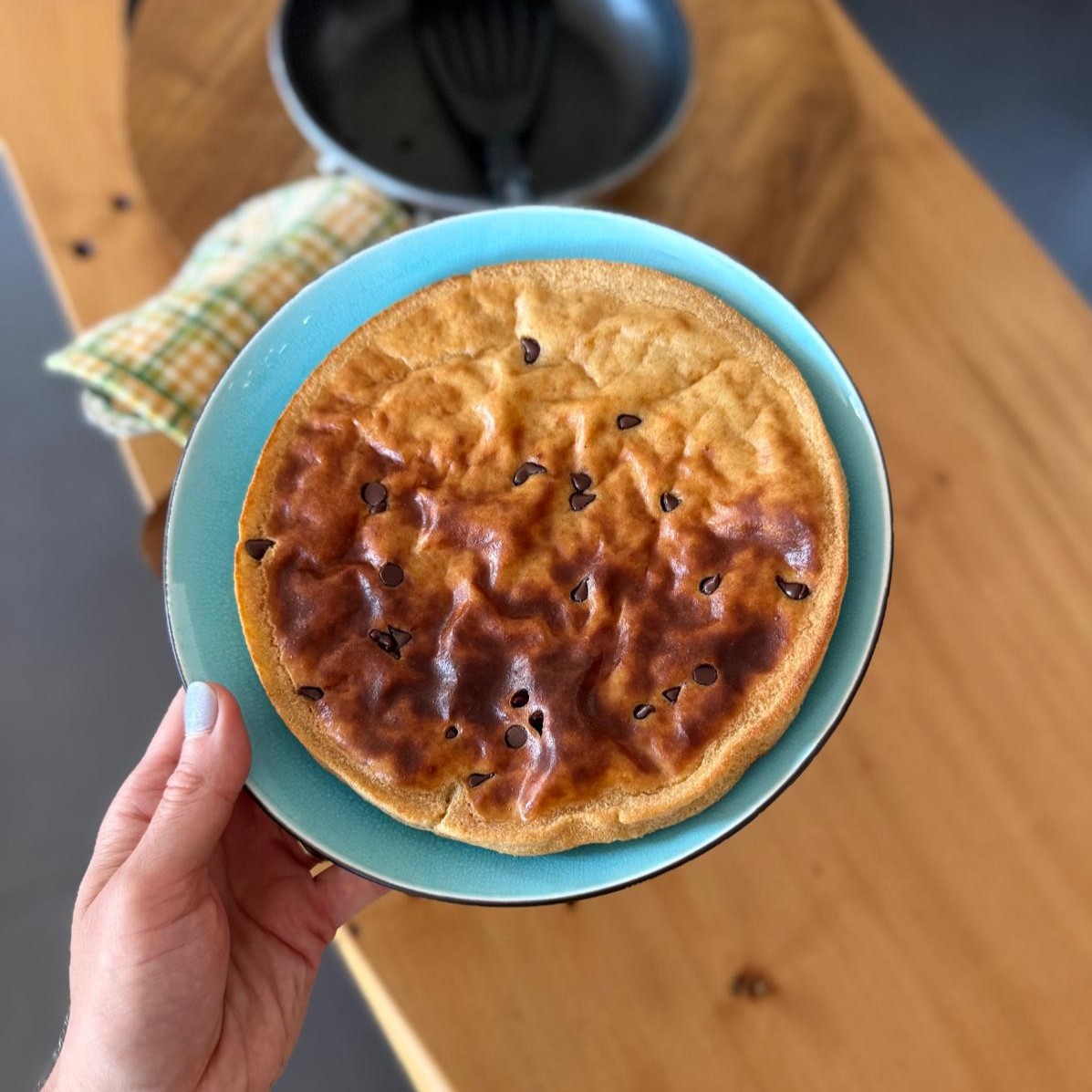
Julija note: I’ve been playing around with this recipe for a while… just almond flour, just oat flour, more protein powder, less… different flavor combos — the whole experiment. And I think I’ve finally landed on the version I’m genuinely really happy with. And by the way: blueberries + lemon zest is a magical combo too… but my sugar cube prefers this one — daaaa, chocolate. So of course! You can literally pour it in a pan, set the timer, and forget… meanwhile doing all the important stuff. (Like… parenting. Or chilling on a sofa for all those 12 minutes. Both count.) Serve warm (with a dollop of Greek yogurt, whipped cream, etc.).
Blood sugar note: This one tends to feel more “GD-friendly” because it’s protein-forward — and you can also control the extras (chips/berries/toppings) depending on what your meter likes.
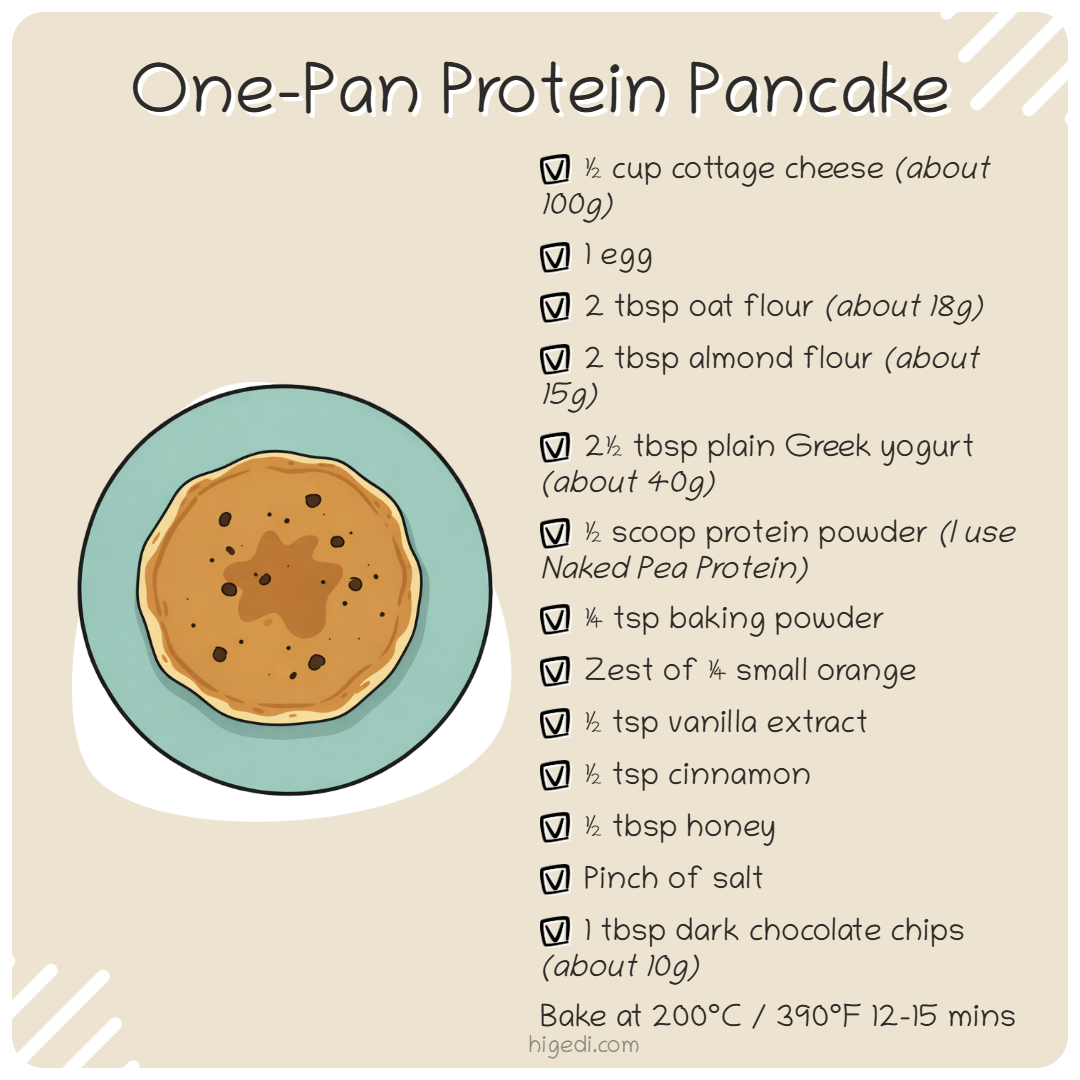
1 serving
Carbs: ~23 g
Protein: ~28–29 g
Fat: ~15–16 g
½ cup cottage cheese (about 100g)
1 egg
2 tbsp oat flour (about 18g)
2 tbsp almond flour (about 15g)
2½ tbsp plain Greek yogurt (about 40g)
½ scoop protein powder (I use Naked Pea Protein)
¼ tsp baking powder
Zest of ¼ small orange
½ tsp vanilla extract
½ tsp cinnamon
½ tbsp honey
Pinch of salt
1 tbsp dark chocolate chips (about 10g)
To serve (optional)
Greek yogurt
Fresh berries
Extra orange zest
Sugar-free syrup
Batter
Add cottage cheese, eggs, Greek yogurt, honey, vanilla, orange zest, salt to a blender and blend until smooth.
Add oat flour, almond flour, pea protein, baking powder and blend briefly until just combined (don't over-blend or it can get tough).
Fold in chocolate chips by hand (or add later once pattern is in skillet)
Pour into your preheated skillet and bake.
Baking
Preheat oven to 200°C / 390°F (or 190°C / 375°F fan).
Put an oven‑safe skillet (cast iron is ideal) in the oven for 5–7 minutes to heat.
Carefully remove, add a little butter (or oil) and swirl to coat.
Pour in batter, sprinkle/fold in the chocolate chips.
Bake 12-15 minutes until puffed and set in the middle (a toothpick should come out mostly clean).
Rest 2–3 minutes, then slice.
Great for Meal Prep • Freezer Friendly • Perfect Snack • Family Friendly
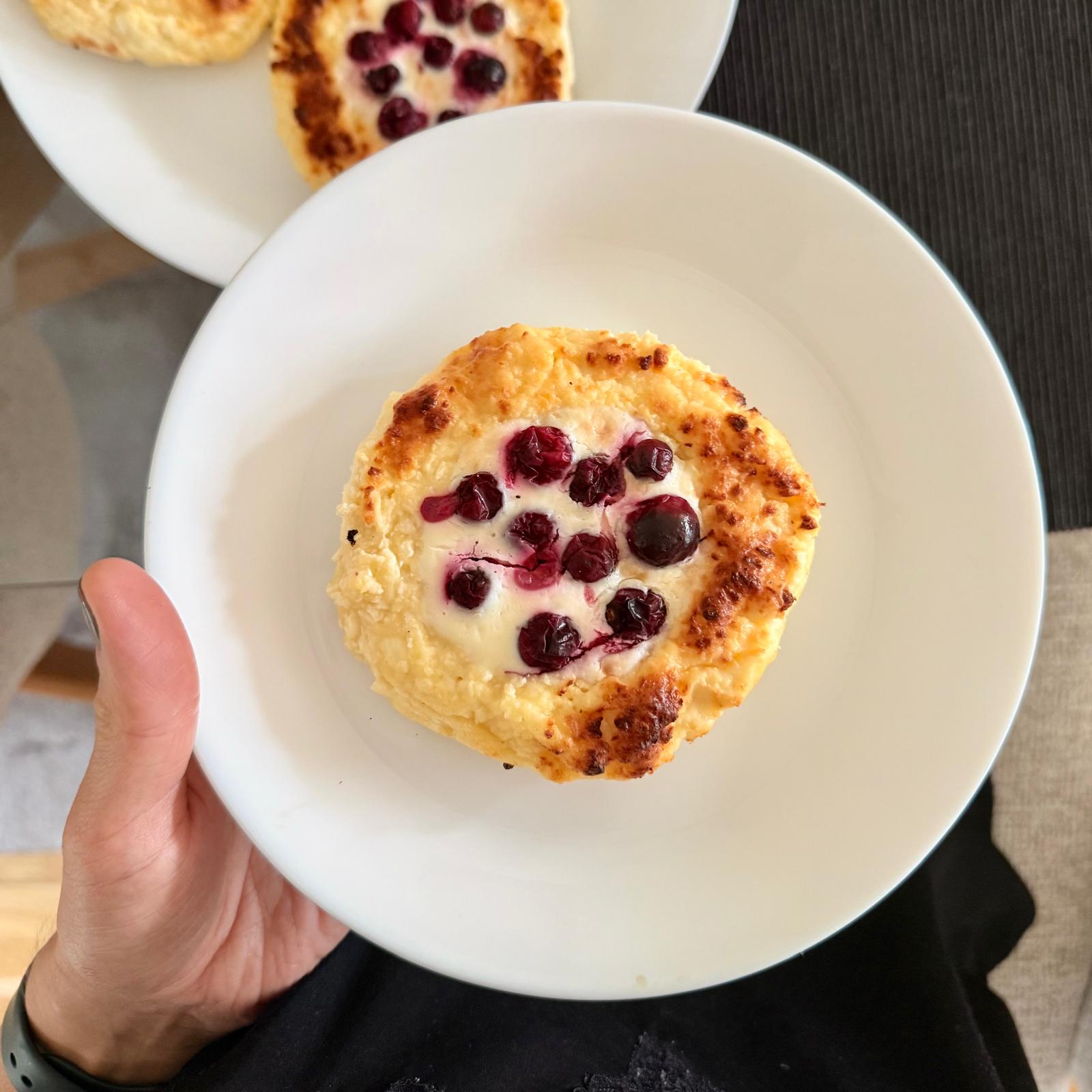
Julija note: This one has a little story. One morning my mom and my little sugar cube surprised me with these… and since that morning it's become one of my ultimate breakfasts… and also a snack… and also a "I need something sweet but balanced" moment. I've made it with all kinds of berries — honestly, all of them work magically.
You can absolutely make these in the oven too — I've just always made them in my air fryer, so that's my default (it needs longer than air fryer). How to know they're done: the edges should look set, but the middle can still have a tiny jiggle — they'll firm up as they cool/chill.
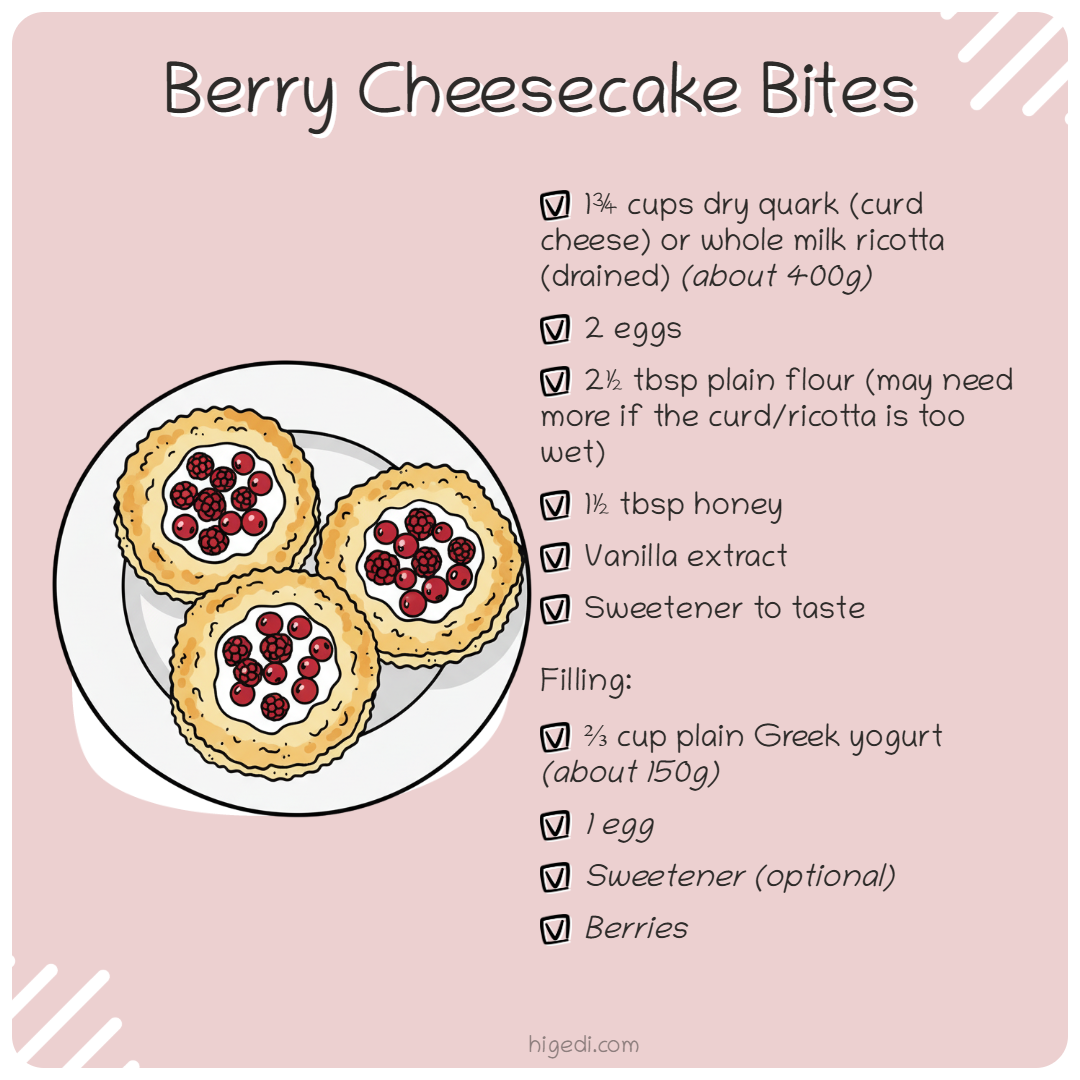
4 "cheesecakes"
Carbs: ~15–17g
Protein: ~14–16 g
Fat: ~6–8 g
Cheesecake base
1¾ cups dry quark (curd cheese) or whole milk ricotta (drained) (about 400g)
2 eggs
2½ tbsp plain flour (may need more if the curd/ricotta is too wet)
1½ tbsp honey
Vanilla extract
Substitutions
Farmer’s cheese
Dry cottage cheese
Filling
⅔ cup plain Greek yogurt (about 150g)
1 egg
Sweetener (optional)
Berries
Mix the quark, eggs, flour, vanilla and sweetener until smooth.
Spoon the mixture into small rounds on parchment paper or silicone liners.
Air fry at 180°C / 356°F for 5 minutes.
Remove and gently press a small indentation into the centre of each cheesecake.
Mix together the Greek yogurt, egg and sweetener before spooning into each indentation.
Top with fresh berries.
Return to the air fryer for another 10 minutes, until lightly golden and set.
Cool before serving.
Make Ahead • Meal Prep • Busy Morning • Chocolate Lover
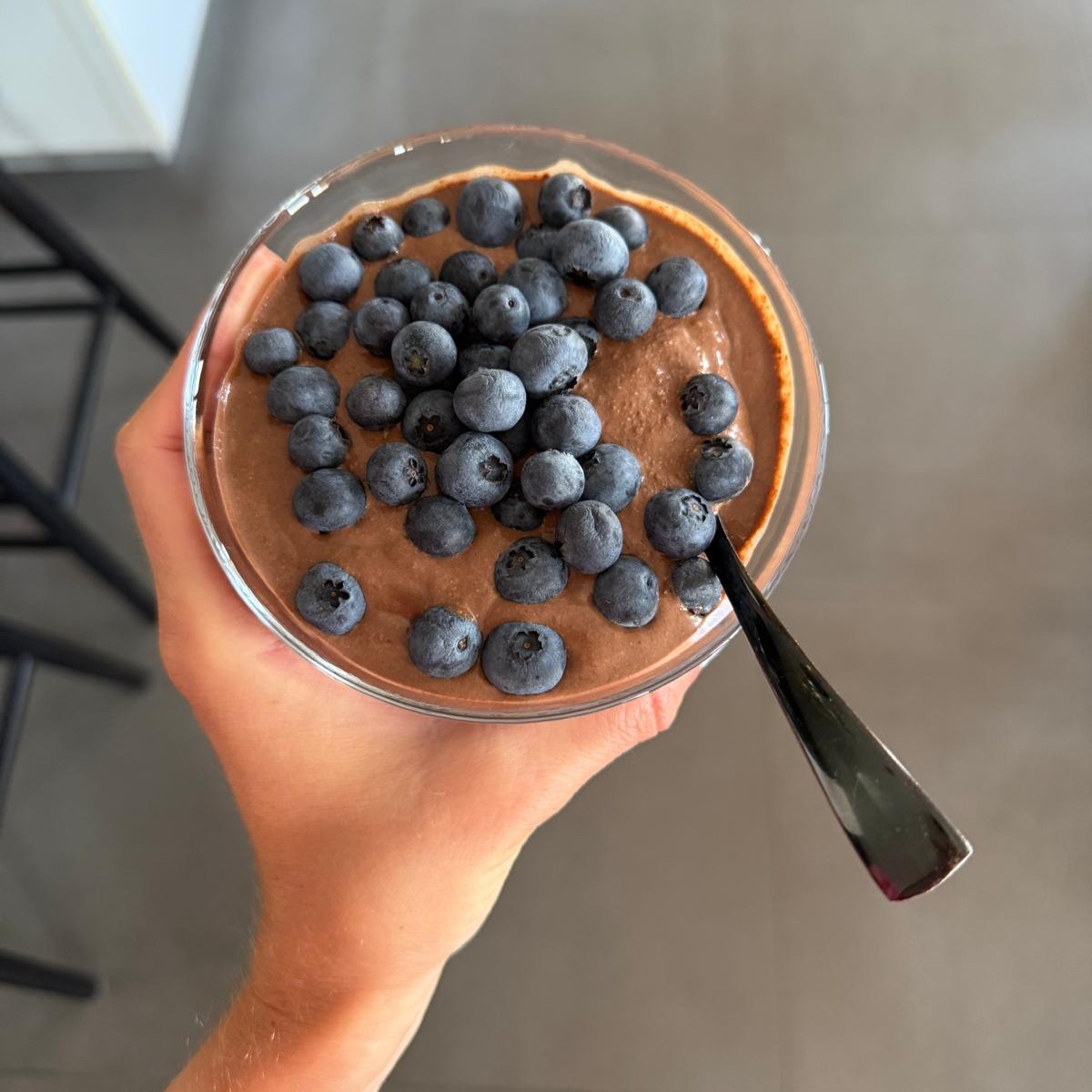
Julija note: I had quite a bit of chia seed pudding in my GD days… some versions were amazing, some were not so much. This one is my current top — but I’m also a chocolate pudding vibe girl, so that might explain it. (Want it less intense? Reduce the cocoa powder to 1 tbsp for a lighter chocolate vibe and make sure to add enough sweetener.)
Blood sugar note: chia + nut butter + cottage cheese is the trio that slows everything down (fiber + fat + protein = steadier ride).
Real life: if it turns too thick overnight, don't panic — just add a splash of milk and stir like you mean it.
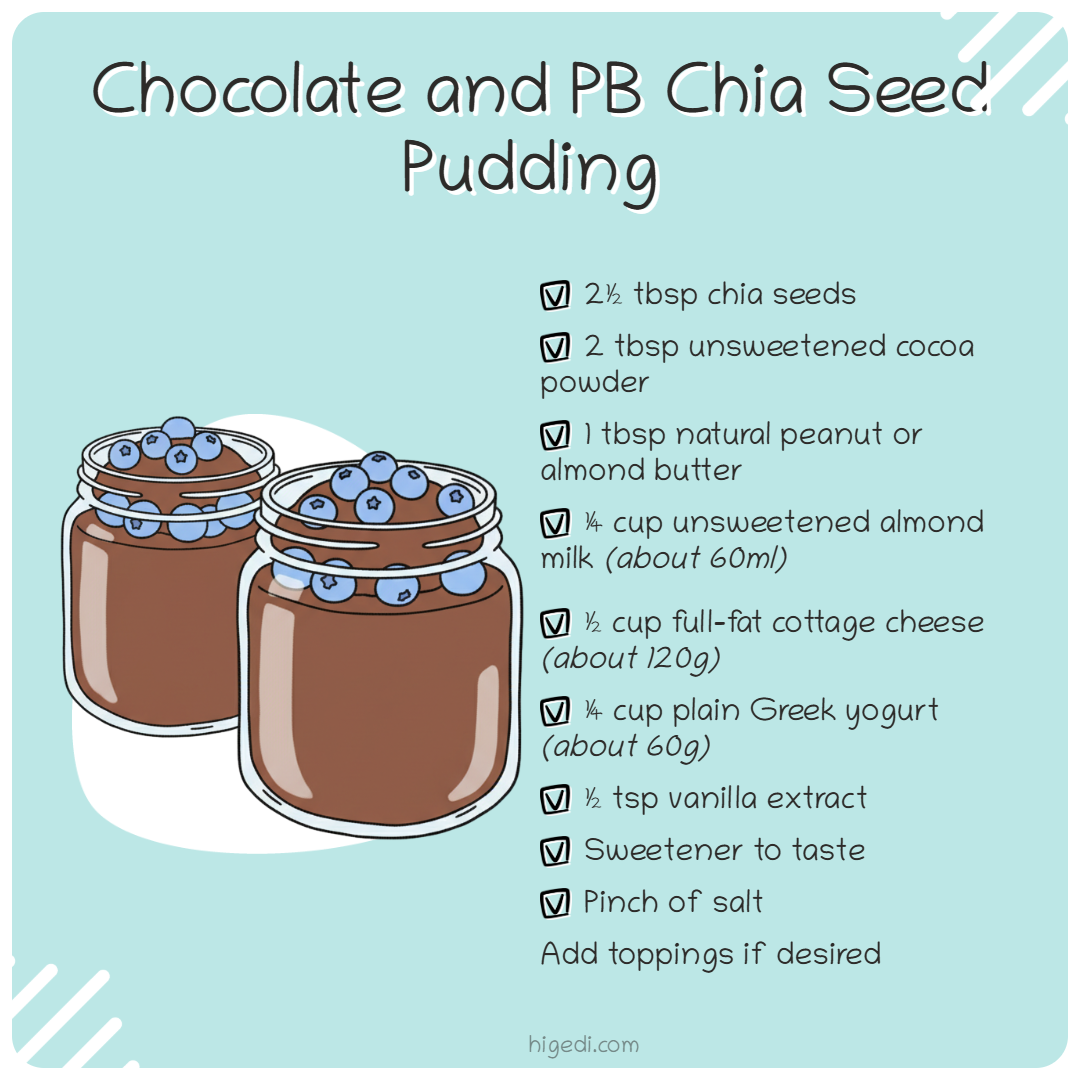
1 serving
Carbs: ~24 g
Protein: ~26 g
Fat: ~22 g
2½ tbsp chia seeds
2 tbsp unsweetened cocoa powder
1 tbsp natural peanut (or almond butter)
¼ cup unsweetened almond milk (just to help it blend) (about 60ml)
½ cup full‑fat cottage cheese (about 100g)
¼ cup plain Greek yogurt (about 60g)
½ tsp vanilla extract
Sweetener to taste (check label for carbs/sugars — I used a splash of sugar-free Torani vanilla syrup, but only because my sugar cube is not a fan of chia seed pudding)
Pinch of salt
¼ cup blueberries: ~5 g carbs
¼ cup raspberries: ~4 g carbs
¼ cup strawberries (chopped): ~3 g carbs
¼ cup blackberries: ~4 g carbs
1 tbsp chopped walnuts/almonds: ~1–2 g carbs
1 tbsp unsweetened shredded coconut: ~1–2 g carbs
Option 1 (smoother): Add everything to a high‑speed blender (including chia) and blend (chia seeds won’t become perfectly smooth in most blenders — they’ll usually break up a bit, but you can still get tiny flecks/texture).
Option 2 (more “classic” chia texture): Blend the wet base first (cottage cheese, Greek yogurt, almond milk, cocoa, nut butter, vanilla, salt, sweetener) until smooth, then stir in the chia seeds by hand.
Add toppings if desired.
Tip: If it thickens too much, just stir in a splash of almond milk before serving.
Meal Prep • Freezer Friendly • Grab & Go • Fall Favourite
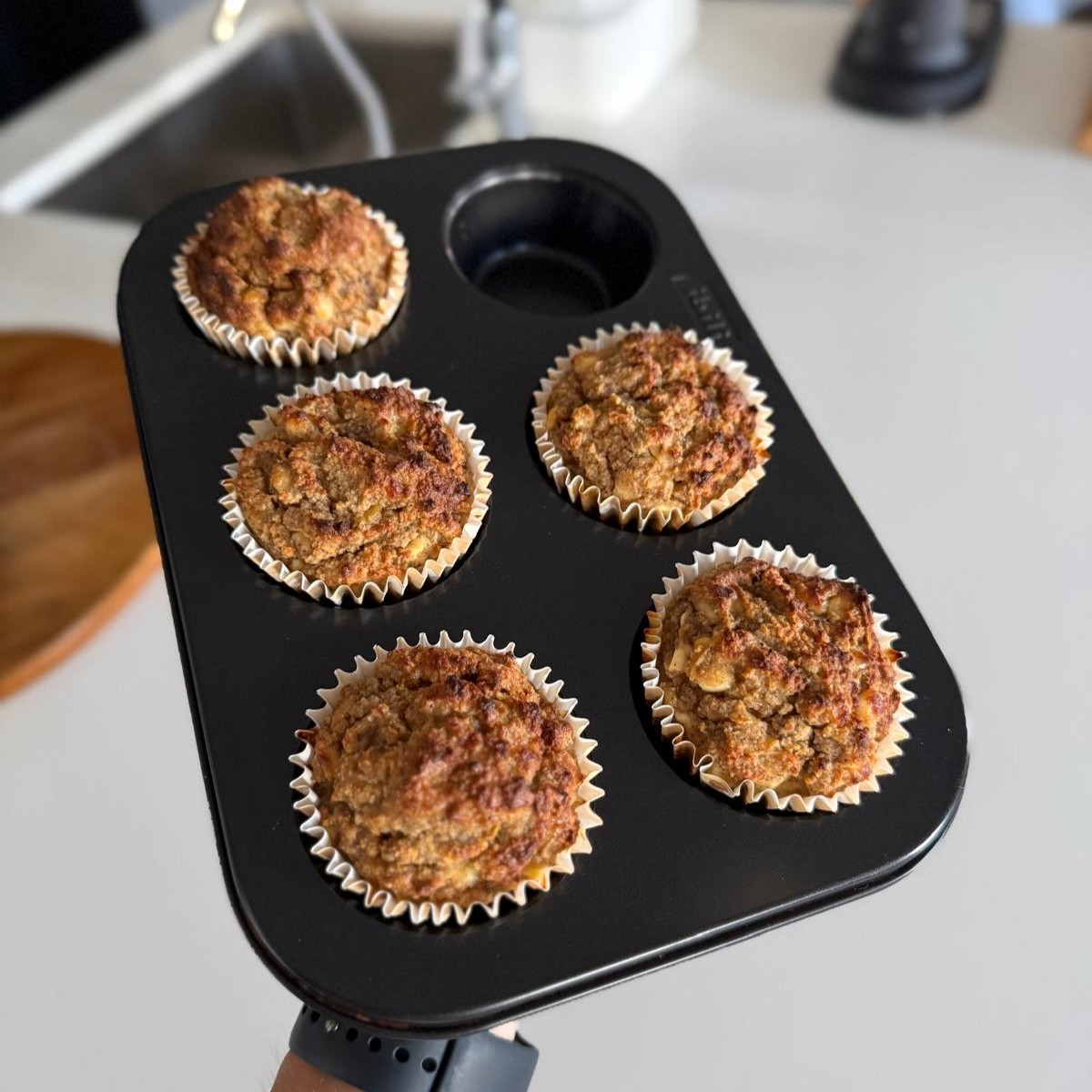
Julija note: These are my regulars… because I also use them for my kid's schoolbox. By the way: they're so good with grated carrot + chopped nuts mixed in as well (instead of apples) if apples aren't your friend — or if you simply want that carrot cake vibe.
These are delicious on their own, but they’re even better served with a spoonful of Greek yogurt for an extra protein boost.
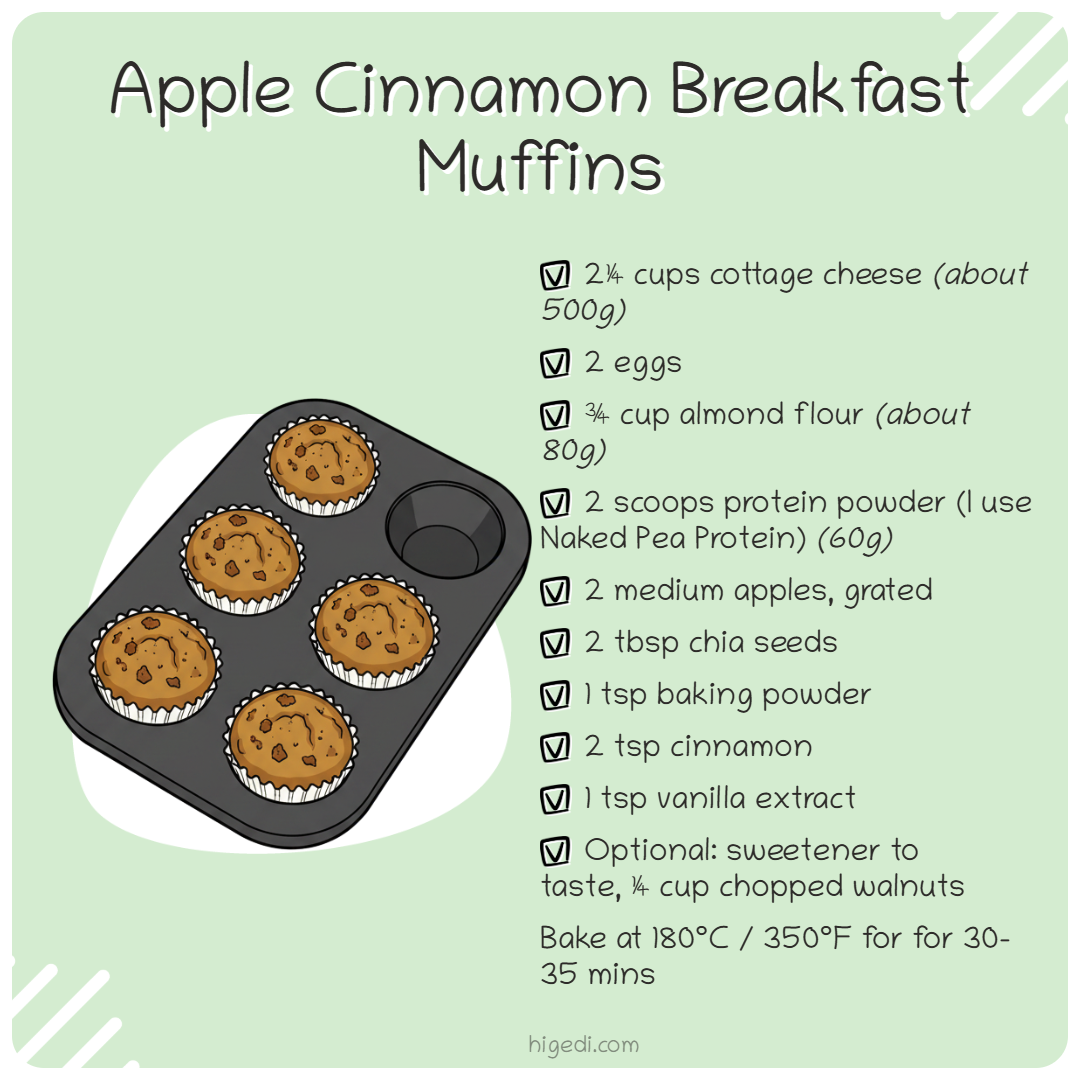
8 large or 10 smaller muffins/squares
If 8 large muffins/squares:
Carbs: ~14 g
Protein: ~15 g
Fat: ~7 g
If 10 smaller:
Carbs: ~11 g
Protein: ~12 g
Fat: ~6 g
2¼ cups cottage cheese (about 500g)
2 eggs
¾ cup almond flour (about 80g)
2 scoops protein powder (I use Naked Pea Protein) (60g)
2 medium apples, grated
2 tbsp chia seeds (if using whole, let batter sit 10 min so it gels/binds)
1 tsp baking powder
2 tsp cinnamon
1 tsp vanilla extract
Optional: sweetener to taste (I am not using any, so the sweetness comes from apples only)
Optional: ¼ cup chopped walnuts
Preheat oven to 180°C / 350°F.
Blend the cottage cheese, eggs, vanilla and sweetener until smooth.
Stir in the dry ingredients.
Fold through the grated apple (and walnuts if using).
Pour into a lined baking pan.
Bake for 30–35 minutes, or until lightly golden and set.
Cool completely before slicing into eight squares.
Grab & Go • Great for Meal Prep • Freezer Friendly • Family Friendly
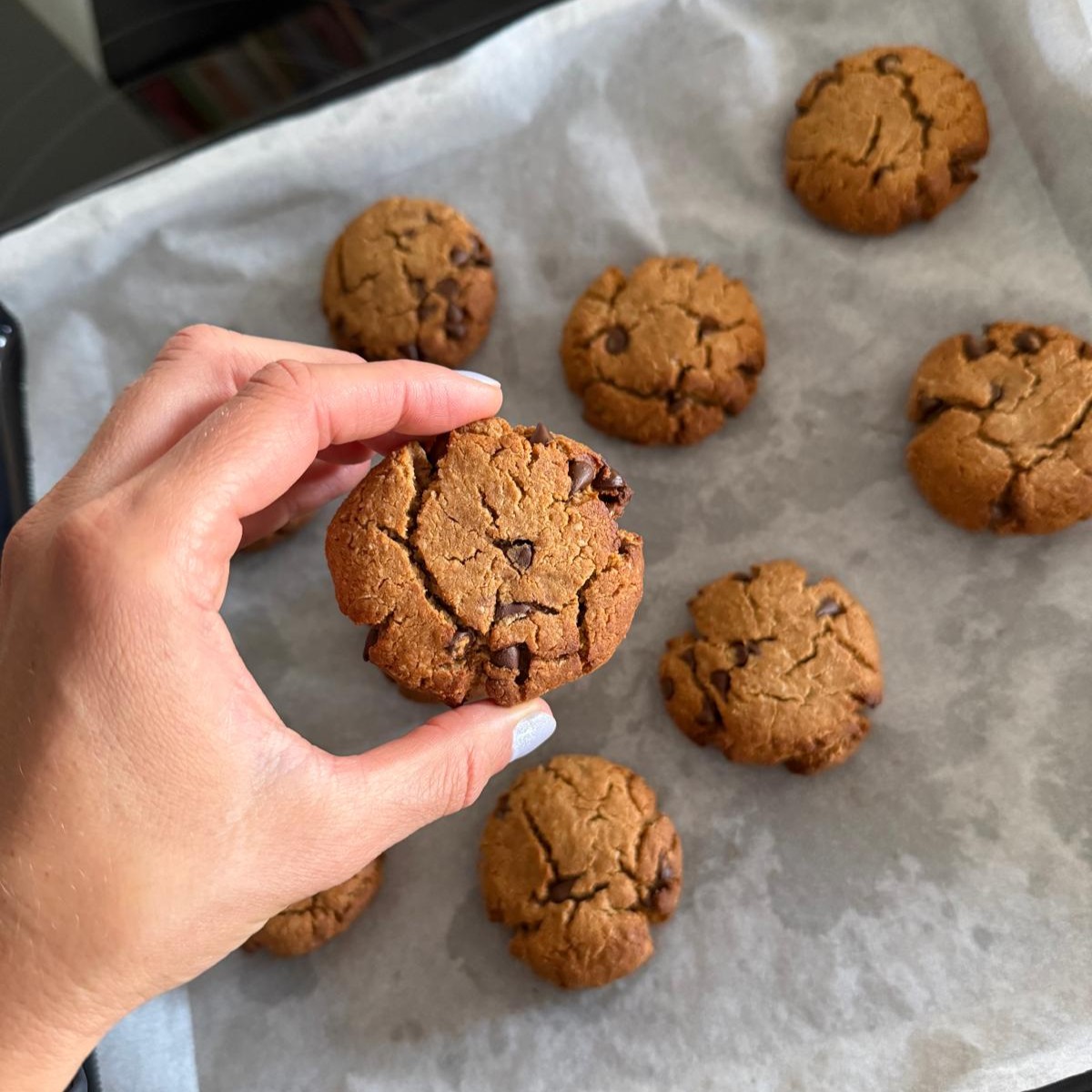
Julija note: Who says cookies can’t be breakfast? These cookies... act like a balanced breakfast. Protein + fat are already built in, so it's not a sugar rollercoaster situation. Lightly sweet only — add sweetener if desired.
Potential tweaks if someone spikes: reduce choc chips, swap oat flour for a bit more almond flour, swap honey for low-carb sweetener, or pair every cookie with extra protein (cheese stick / boiled egg) if needed.
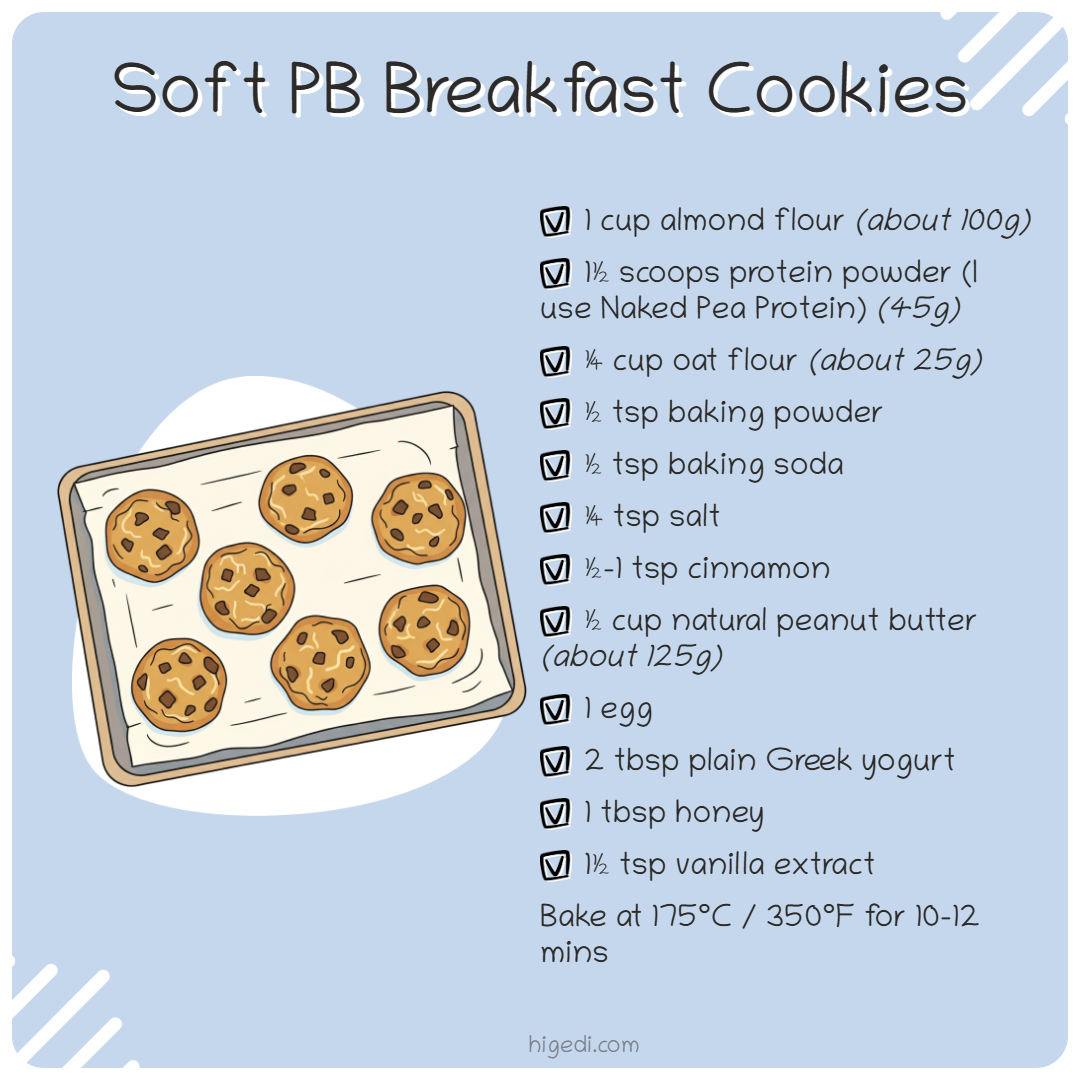
10 large cookies
Protein: ~9g
Carbohydrates: ~10g
Fat: ~13g
1 cup almond flour (about 100g)
1½ scoops protein powder (I use Naked Pea Protein) (45g)
¼ cup oat flour (about 25g)
½ tsp baking powder
½ tsp baking soda
¼ tsp salt
½-1 tsp cinnamon
½ cup natural peanut butter (about 125g)
1 egg
2 tbsp plain Greek yogurt
1½ tsp vanilla extract
1 tbsp honey
¼ cup (40g) dark chocolate chips
Preheat oven to 175°C / 350°F.
In a large bowl, combine the almond flour, protein powder, oat flour, baking powder, cinnamon and salt.
Add the peanut butter, egg, Greek yogurt, vanilla and sweetener.
Mix until a soft dough forms.
Fold through the chocolate chips.
Divide into 10 cookies and gently flatten slightly.
Bake for 10–12 minutes until the edges are just set.
Allow the cookies to cool completely—they’ll continue to firm up as they cool while staying soft in the centre.
Make Ahead • Meal Prep • Busy Morning • Family Friendly
Julija note: Oats are one of those GD "it depends" foods — some mamas do great, some spike instantly (especially at breakfast). This version is my attempt to make oats behave by buffering them with Greek yogurt + nut butter + chia.
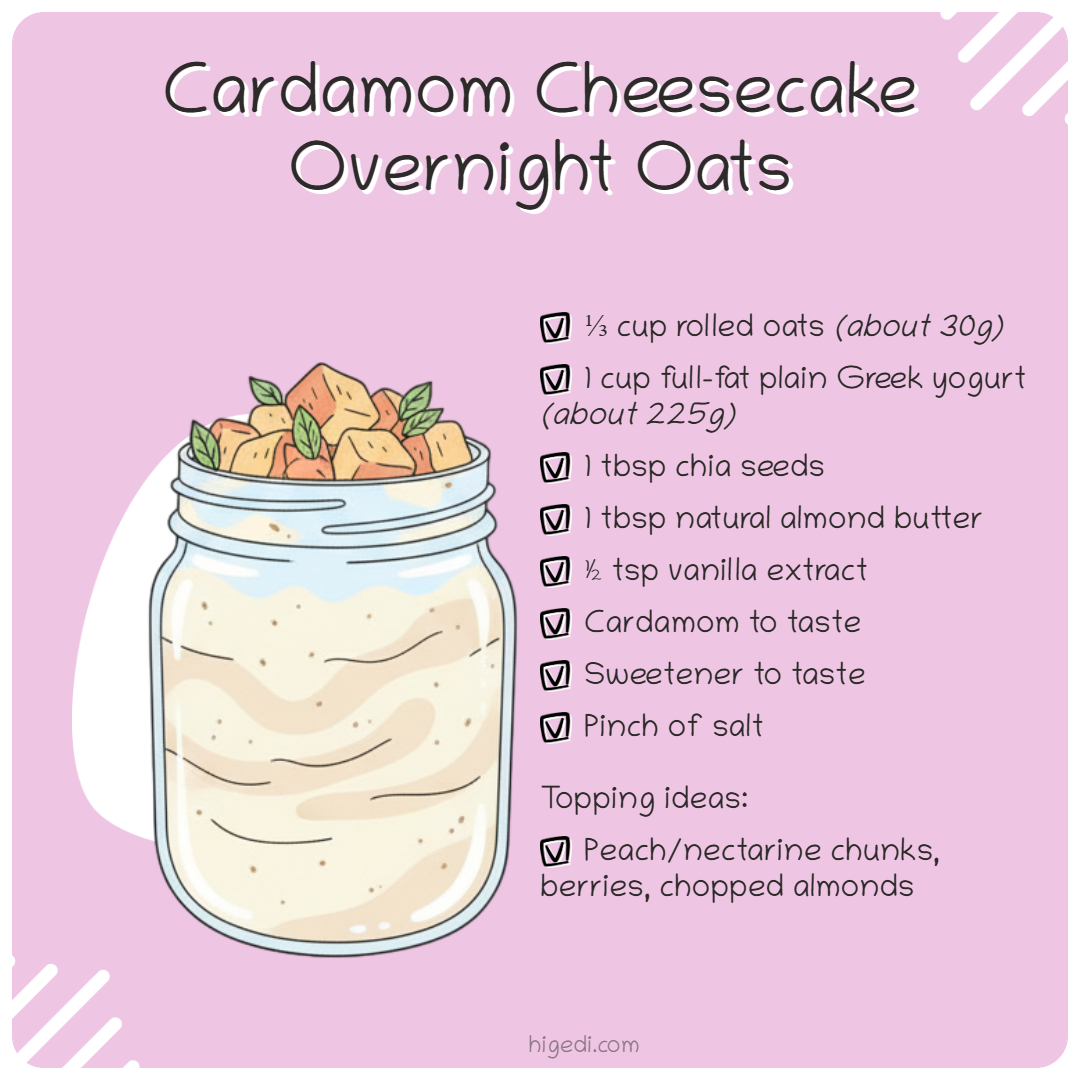
1 serving
Carbs: ~25–27g
Protein: ~24–27g
Fat: ~10–12g
⅓ cup rolled oats (about 30g)
1 cup full-fat plain Greek yogurt (about 225g)
1 tbsp chia seeds
1 tbsp natural almond butter
½ tsp vanilla extract
Cardamom to taste
Sweetener to taste (use low-carb to keep carbs count in check)
Pinch of salt
Topping ideas
peach or nectarine chunks
berries
chopped almonds
Stir together the oats, Greek yogurt, chia seeds, vanilla, cardamom, sweetener, salt, and almond butter until smooth.
Refrigerate overnight.
Add toppings if desired.
Chocolate Lover • Meal Prep • Make Ahead • Unexpected Favourite
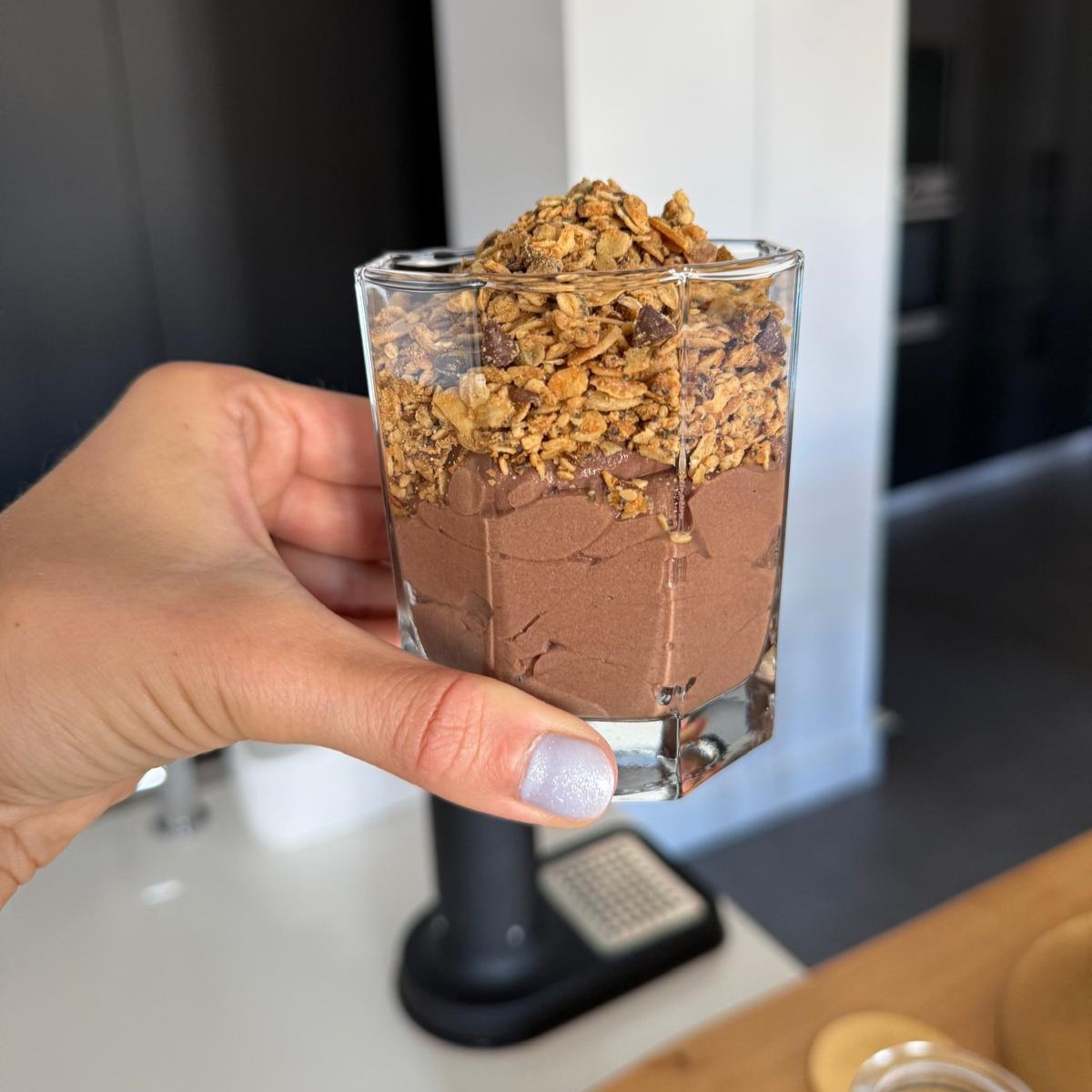
Julija note: Okay, I know this one reads weird and you might wonder if there’s a typo. There isn’t. It’s actually made with hard‑boiled eggs. You kind of have to try it to trust that it works… but it does — it just needs time to properly chill in the fridge.
Sweetness matters here too, so don’t skip the sweetener (or make sure you’re adding sweetness via toppings). Because it’s naturally very low in carbs, I love serving it with my homemade peanut butter granola (recipe below) and/or fresh berries for a beautifully balanced breakfast.
I’m more of a bitter‑chocolate dessert girl, but feel free to adjust the sweetener to taste (note: 1 tbsp honey ≈ 17g carbs — or use your preferred low‑carb sweetener).
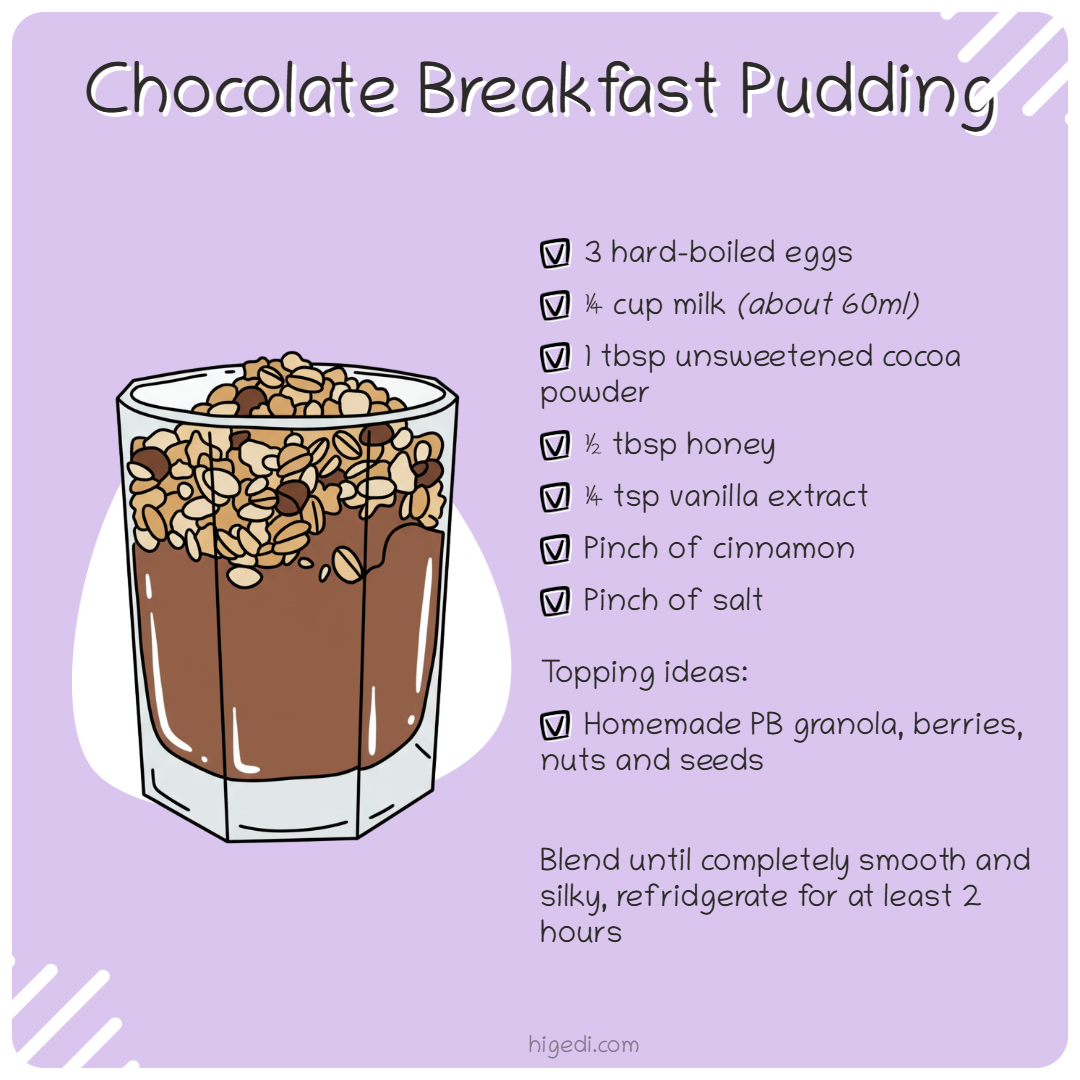
1 serving
Carbs: ~11–12 g
Protein: ~19–21 g
Fat: ~15–17 g
3 hard-boiled eggs
¼ cup milk (unsweetened almond milk keeps the carbohydrates lower, but any milk works) (about 60ml)
1 tbsp unsweetened cocoa powder
½ tbsp honey
¼ tsp vanilla extract
Pinch of cinnamon
Pinch of salt
To serve
Homemade Peanut Butter Seed Granola (see recipe below)
Berries
Nuts and seeds
Add all ingredients to a high-speed blender.
Blend until completely smooth and silky.
Transfer to serving bowls or jars.
Refrigerate for at least 2 hours before serving.
Top with granola and/or berries just before eating.
Meal Prep • Pantry Staple • High Protein • Keeps Well
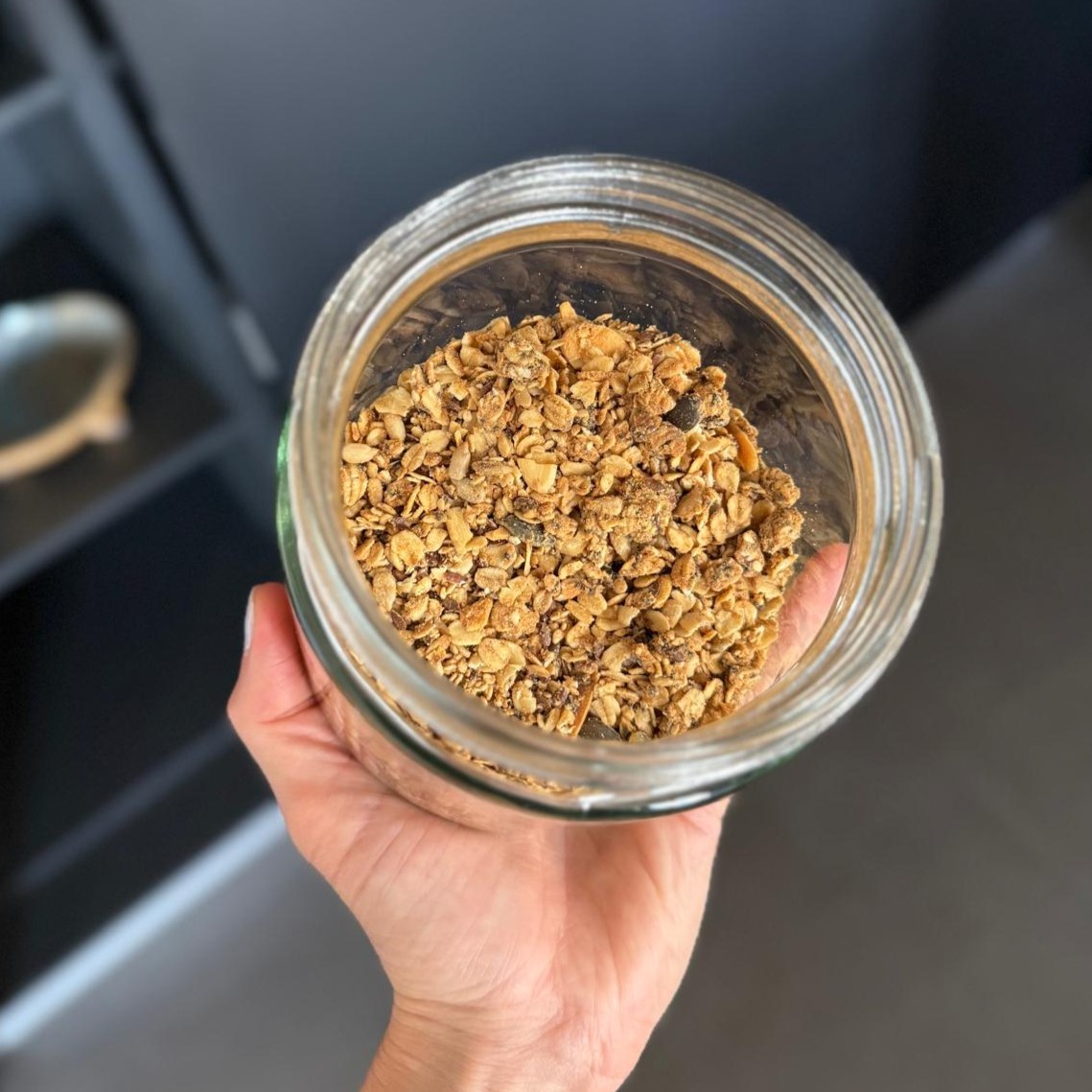
Julija note: If you've ever checked granola labels, you know the deal… packed with sugar, lots of carbs, not that much protein. And somehow it's also expensive! Most of us don't ever attempt to make granola at home, but it's honestly one of the easiest things ever — and the best part is it's super customizable. Add more of your favorite nuts/seeds, skip the ones you're not obsessed with, make it extra crunchy, make it more peanut-buttery… it's your granola era.
Blood sugar note: treat it like a topping, not a cereal bowl. Perfect sprinkled over yogurt, chia seed pudding or the chocolate breakfast pudding.
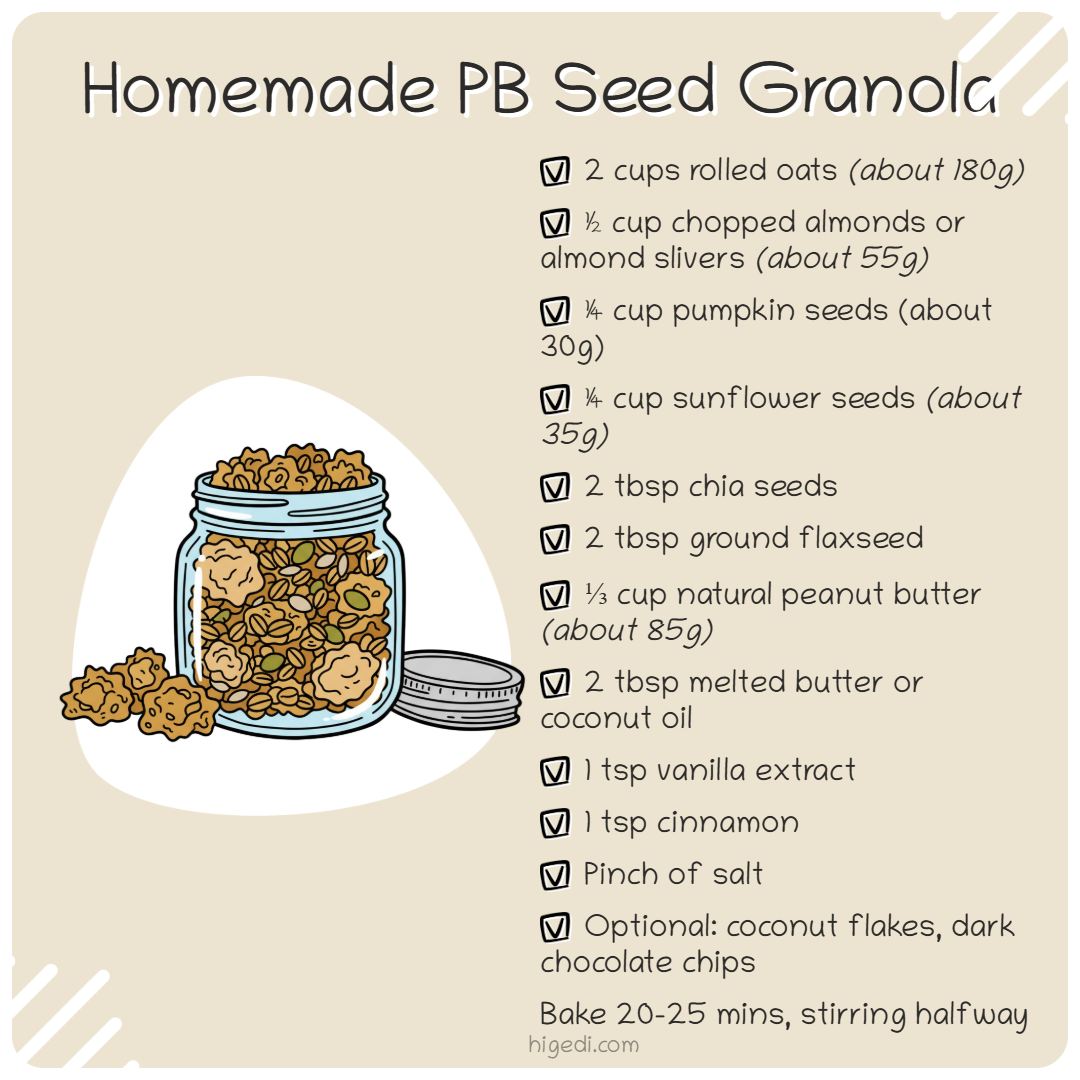
Approximately 12-16 servings
12 servings (½ cup each)
Protein: ~7 g
Carbs: ~16 g
Fat: ~12 g
16 servings (about ⅓ cup each)
Protein: ~5 g
Carbs: ~12 g
Fat: ~9 g
2 cups rolled oats (about 180g)
½ cup chopped almonds or almond slivers (about 55g)
¼ cup pumpkin seeds (about 30g)
¼ cup sunflower seeds (about 35g)
2 tbsp chia seeds
2 tbsp ground flaxseed
⅓ cup natural peanut butter (about 85g)
2 tbsp melted butter or coconut oil
1 tsp vanilla extract
1 tsp cinnamon
Pinch of salt
Optional
Unsweetened coconut flakes
Dark chocolate chips
Preheat oven to 160°C / 320°F.
Mix dry ingredients.
In a small saucepan (low heat) or microwave-safe bowl, gently warm peanut butter + butter/coconut oil until smooth and pourable. Stir in vanilla.
Pour the wet mixture over the dry ingredients and mix really well until everything is evenly coated.
Spread onto a baking tray (for clusters, press it down firmly with a spatula).
Bake 20–25 minutes, stirring halfway (or don’t stir if you want bigger clusters—just rotate the pan).
Cool completely before storing.
5-Minute Breakfast • Everyday Favourite • Customisable • Savoury
Julija note: This isn’t really a recipe. It’s a formula you can customise based on what’s in your fridge.
Instead of simply spreading avocado onto toast, mix it with cottage cheese first (blend if texture is not your things). The result is creamy, satisfying and much higher in protein—an easy way to help keep blood sugar levels steady.
Real life: if mornings are your toughest numbers, go smaller on the bread and bigger on the toppings. It's often not too many carbs, but "too little protein to offset those carbs.
For breakfast, aim for around 15–30g carbohydrates, depending on your personal targets.
Bread options include (choose what you tolerate best):
(Wholegrain) sourdough
Wholemeal bread
High-fibre bread
Seeded bread
Whole grain toast / whole wheat toast
Here are a few HIgedi community mama picks:
Mix together:
½ avocado
½ cup (115g) cottage cheese
Salt
Pepper
Lemon juice
Mash until creamy but still slightly chunky.
Choose one or two:
Smoked salmon
Chicken breast
Turkey breast (or turkey sausage on the side)
Boiled egg or scrambled egg
Tofu
Leftover lean meat from dinner (yes, it works!)
Ideas include:
Cherry tomatoes
Cucumber ribbons
Radishes
Microgreens
Hemp hearts
Pumpkin seeds
Sesame seeds
Everything bagel seasoning
Fresh herbs
Chili flakes
Optional: a drizzle of olive oil
Cottage cheese + avocado spread + salmon (cooked or smoked) + cucumber
Cottage cheese + avocado spread + chicken + (sun-dried) tomatoes + basil
Cottage cheese + avocado spread + sliced boiled egg + everything bagel seasoning
Cottage cheese + avocado spread + tofu + roasted peppers
Who says pizza is only for dinner?
I’ve included two versions depending on how much time you have.
Weekend Favourite • Meal Prep • Savoury • Family Friendly
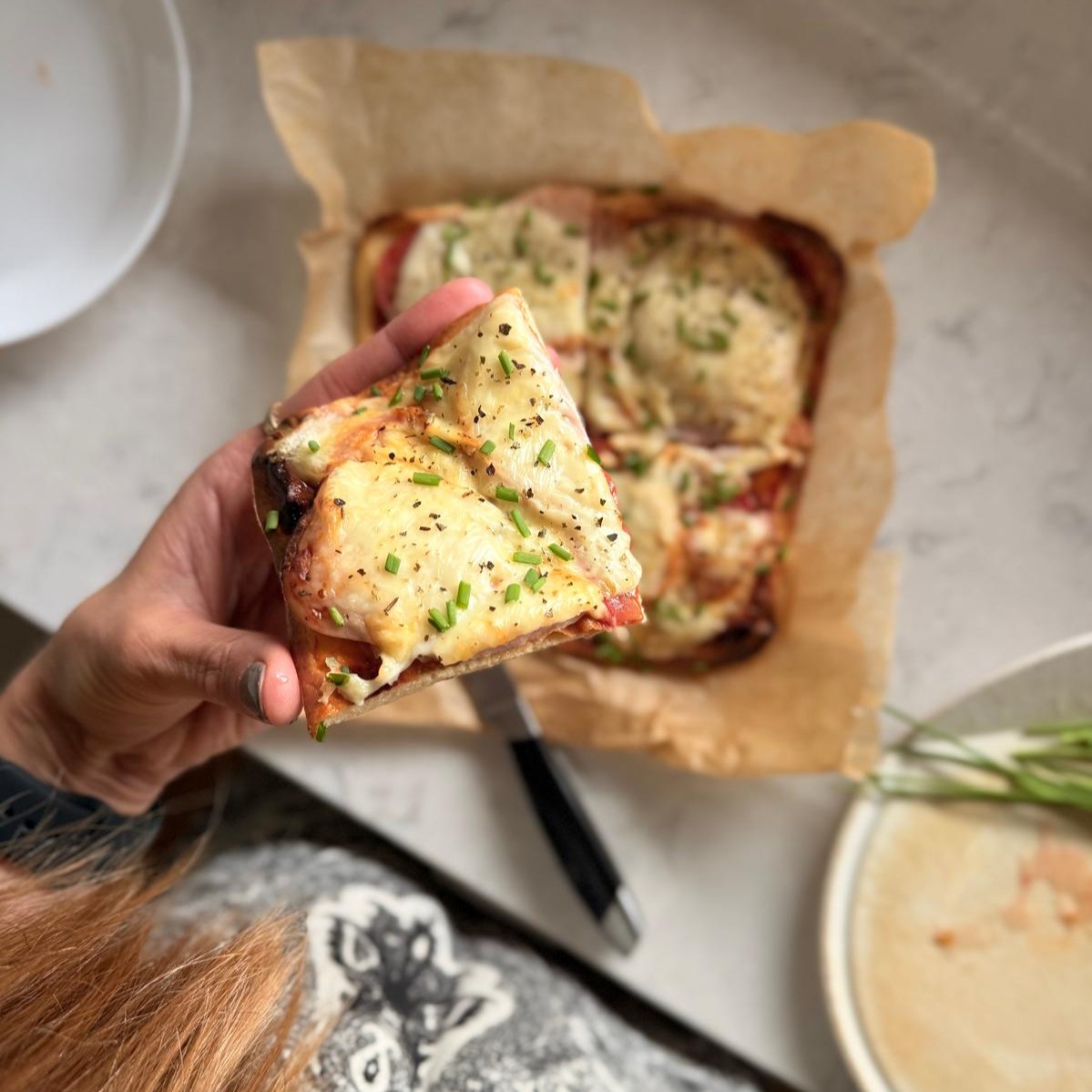
Julija note: This is a protein bomb disguised as pizza, and honestly… I love that for us. The crust does the stabilizing work, so you can eat more than 1-2 pieces without stressing.
Blood sugar note: if you need more carbs, add them on the side instead of changing the crust.
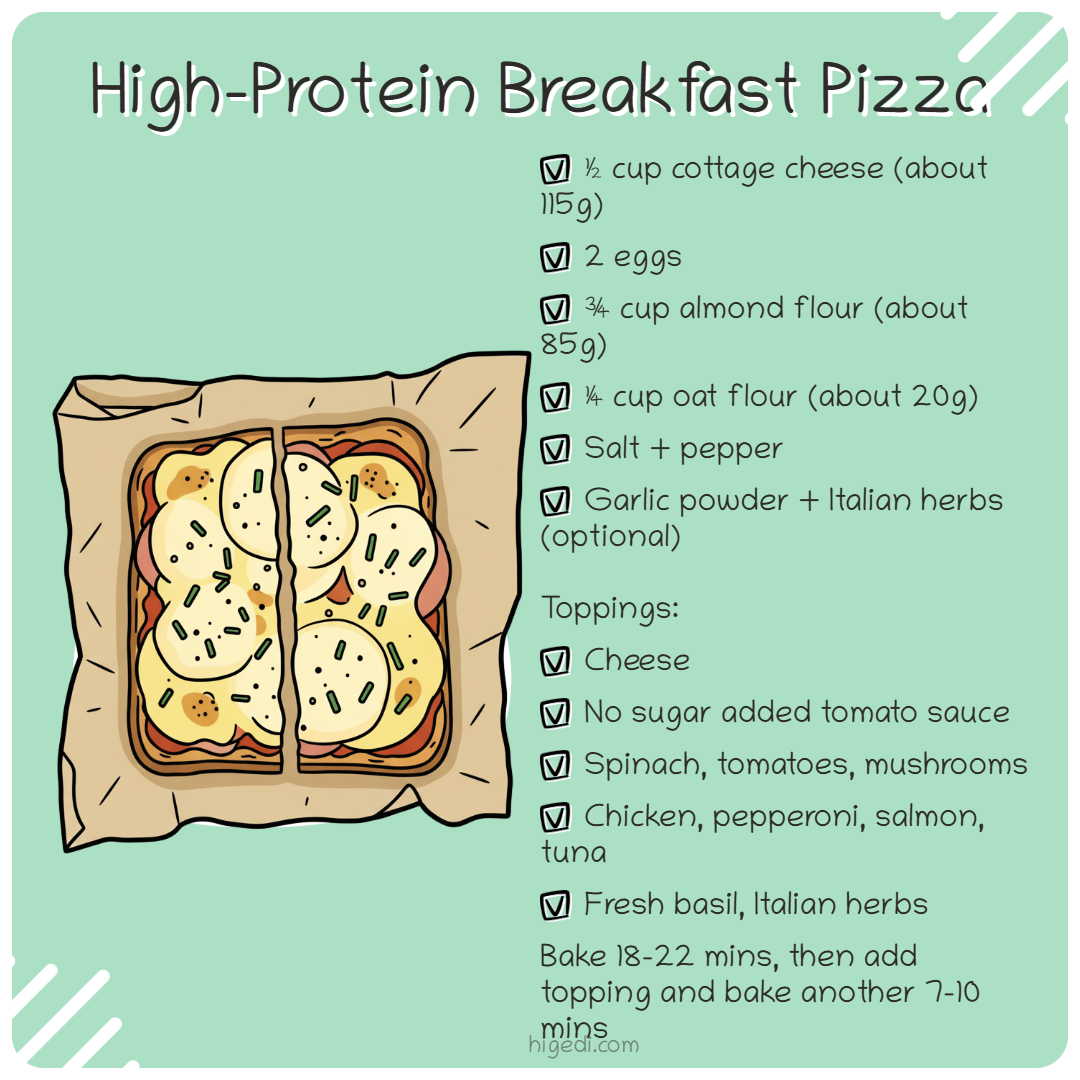
1 serving
Carbs: ~19–21 g
Protein: ~34–36 g
Fat: ~58–60 g
Crust
½ cup cottage cheese (about 115g)
2 eggs
¾ cup almond flour (about 85g)
¼ cup oat flour (about 25-30g)
Salt + pepper
Garlic powder + Italian herbs (optional)
Toppings (choose your favourites)
Mozzarella (or other cheese)
No sugar added tomato sauce
Baby spinach, cherry tomatoes, mushrooms
Chicken, turkey, epperoni, salmon, tuna
Fresh basil, Italian herbs
Option 1: Oven (best for a larger crust)
Preheat to 200°C (400°F). Line a tray with parchment.
Spread batter into a round.
Bake 18–22 min until set and lightly golden.
Add toppings, then bake 8–10 min more.
Option 2: Air fryer (best for a smaller crust)
Preheat air fryer to 190°C (375°F) for 2–3 min.
Line the basket with parchment (trim so it doesn’t touch the heating element).
Place crust in basket and air fry 10–14 min, checking around 10 min, until set and golden.
Add toppings and air fry 3–6 min more until melted/warmed.
If your air fryer runs hot, drop to 180°C (356°F) and add 1–2 minutes.
10 Minutes • Busy Morning • Family Favourite
Julija note: This is one of those breakfasts you’ll come back to again and again. It’s ready in under ten minutes and endlessly customizable.
Blood sugar note: if tortillas spike you, try a smaller one or a higher-fibre version — keep the protein layer generous.
1 serving
Depends on a tortilla and toppings.
Aim for approximately:
1 high-fibre tortilla (or any type your body tolerates)
2-3 tbsp cottage cheese
Generous sprinkle mozzarella
Sliced turkey, pepperoni, bacon, chicken, or leftovers
Cherry tomatoes
Baby spinach
Italian seasoning
Fresh basil or rocket for garnish (optional)
Spread cottage cheese over tortilla.
Add cheese and toppings.
Bake or air fry for 6–8 minutes until crisp.
Finish with fresh basil or rocket if desired.
Great for Meal Prep • Freezer Friendly • Savoury Favourite • Breakfast or Lunch
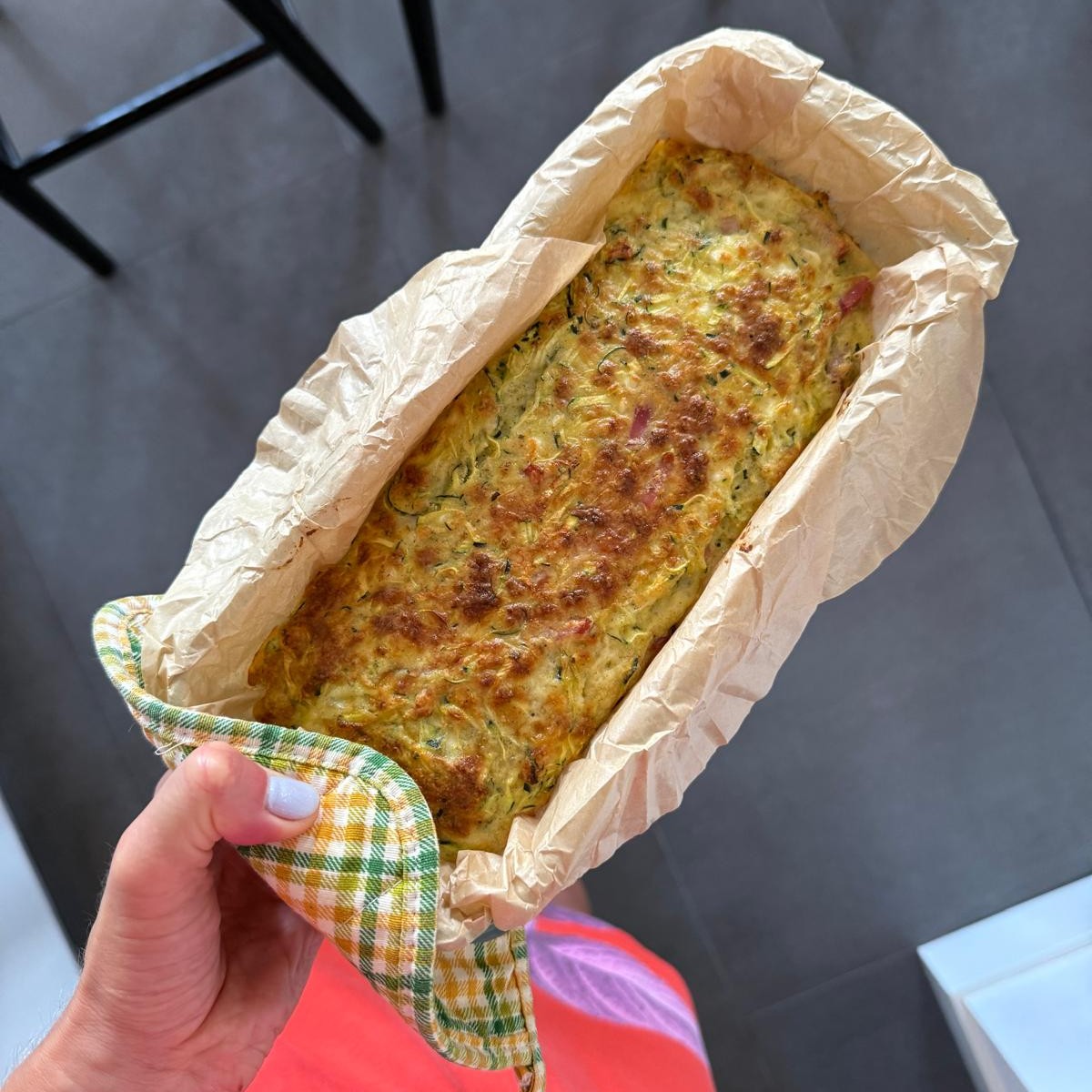
Julija note: This is one of those meals that makes GD feel calmer: naturally lower-carb, high-protein, and meal-prep friendly. Think somewhere between a crustless quiche and a savoury slice—packed with vegetables, protein and flavour. It’s delicious warm, cold, straight from the fridge or tucked into lunchboxes.
Blood sugar note: if you need more carbs, add them on the side instead of changing the slice itself.
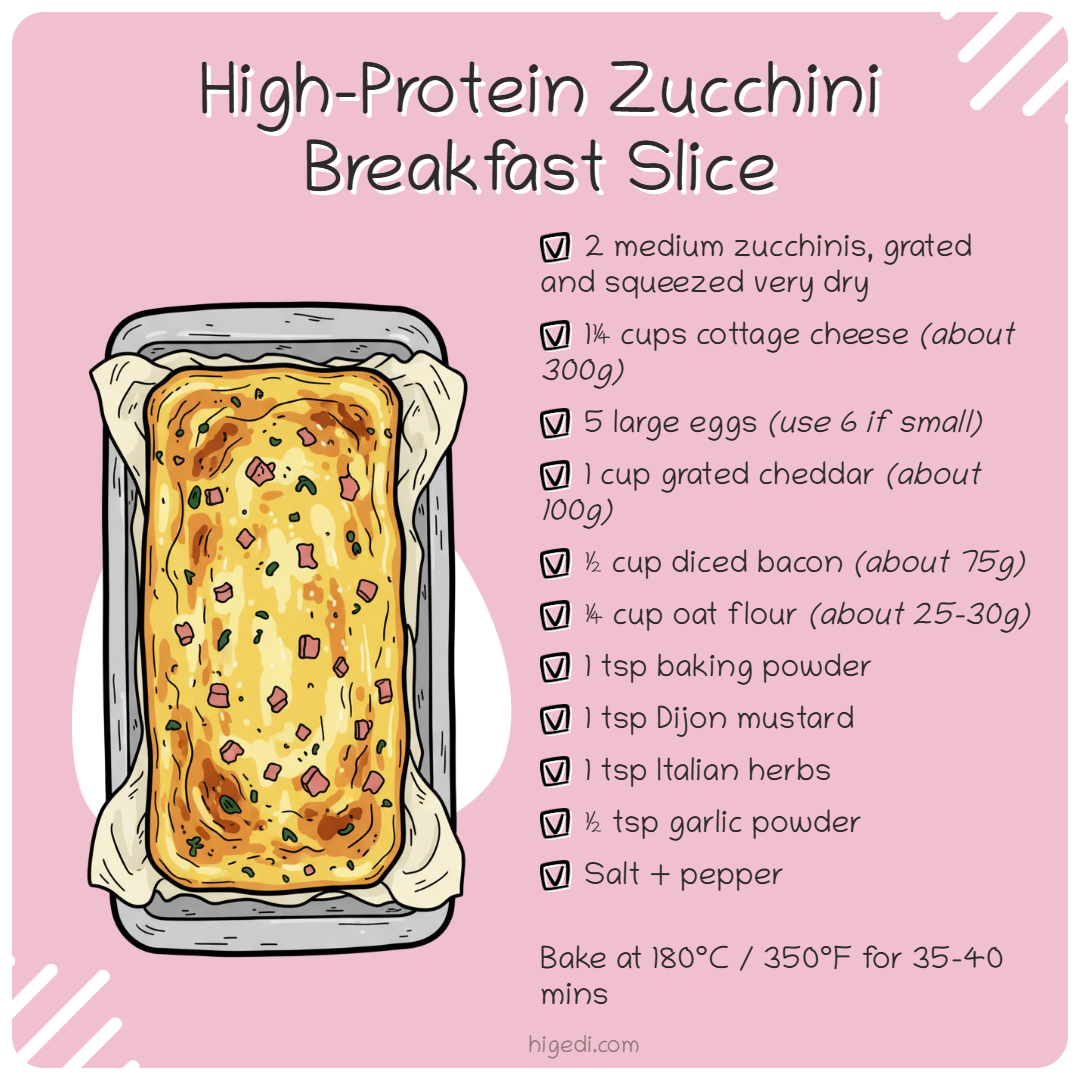
4 servings
Carbs: ~12–13 g
Protein: ~34–37 g
Fat: ~33–35 g (fat will drop often by ~5–10g per slice using turkey bacon/turkey sausage)
2 medium zucchinis, grated and squeezed very dry
1¼ cups cottage cheese (about 300g)
5 large eggs (use 6 if small)
1 cup grated cheddar (about 100g)
½ cup diced bacon (or turkey bacon/turkey sausage) (about 75g)
¼ cup oat flour (about 25-30g)
1 tsp baking powder
1 tsp Dijon mustard
1 tsp Italian herbs
½ tsp garlic powder
Salt + pepper
Preheat oven to 180°C / 350°F.
Squeeze as much liquid from the zucchini as possible.
Mix everything together.
Pour into a lined square baking pan.
Bake 35–40 minutes.
Cool slightly before slicing.
5 Minutes • On the Go • Summer Favourite
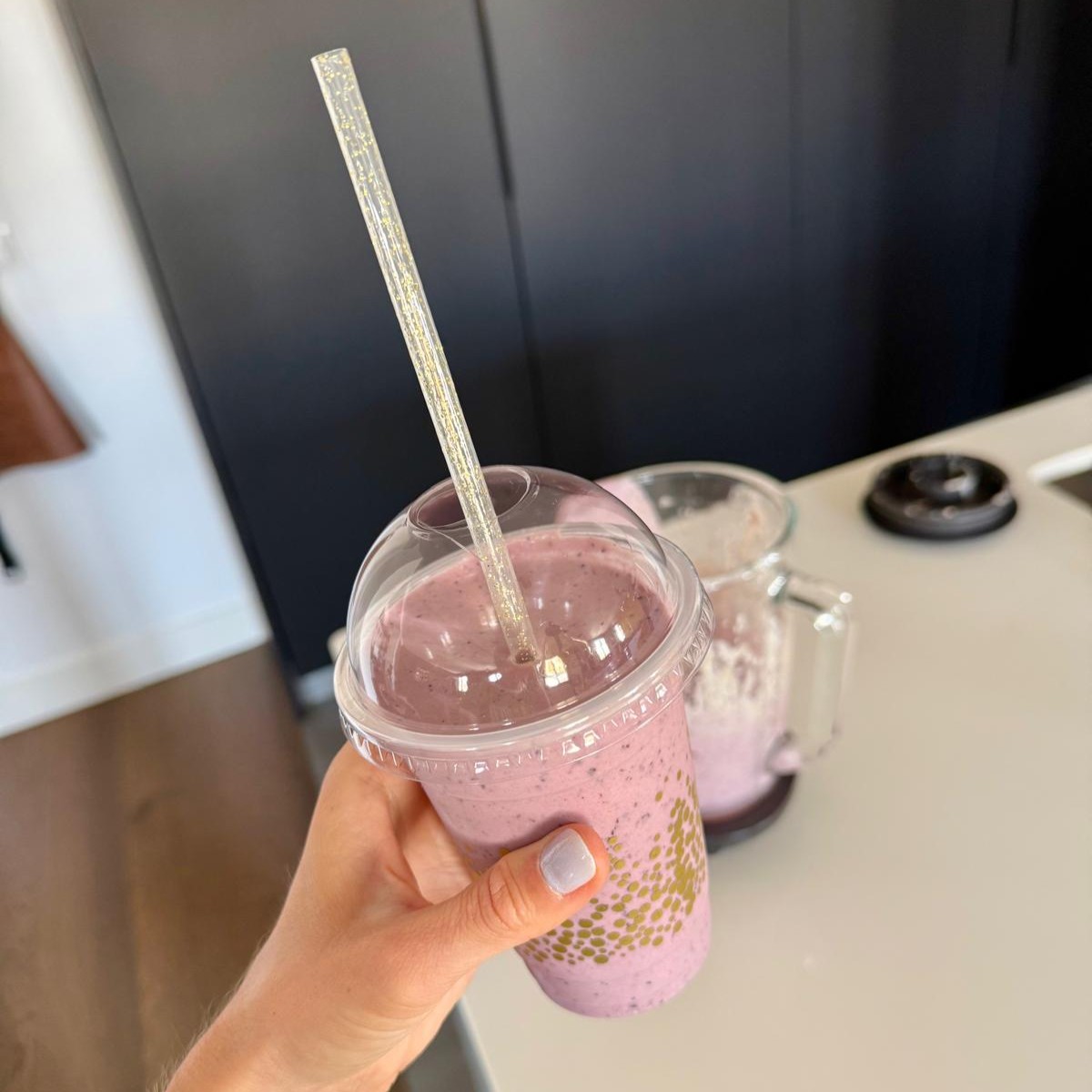
Julija note: This smoothie works because it's not "just fruit." The protein base (Greek yogurt + nut butter, and cottage cheese if you use it) helps keep the fruit carbs from hitting too fast.
Real life GD hack: cauliflower adds volume without extra carbs — it sounds odd, but you don't taste it. Feel free to swap blueberries for other berries (raspberries work magically here).
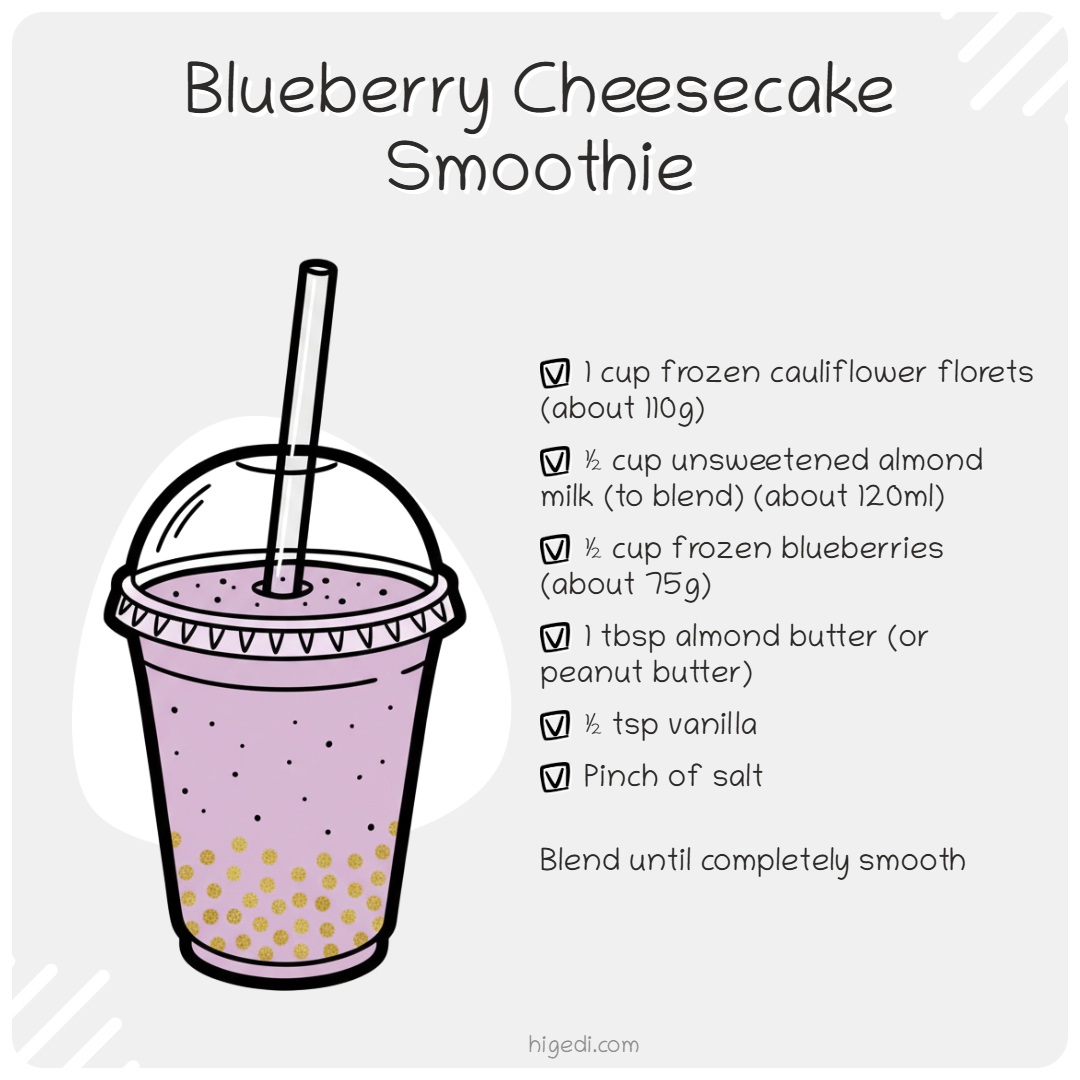
1 serving
Carbs: ~ 20–24g
Protein: ~ 18–22g
Fat: ~ 10–13g
1 cup frozen cauliflower florets (about 110g)
¾ cup full-fat Greek yogurt (Tip: you can sub ½ of the Greek yogurt for cottage cheese to bump protein even more.) (about 170g)
½ cup unsweetened almond milk (to blend) (about 120ml)
½ cup frozen blueberries (about 75g)
1 tbsp almond butter (or peanut butter)
½ tsp vanilla
Pinch of salt
Sweetener
Chia seeds
Cinnamon
Blend until completely smooth.
If you’ve made it this far, you probably noticed something.
None of these breakfasts are about being “perfect.” They’re about giving you options.
Some mornings you’ll have time to bake pancakes. Other mornings you’ll grab two breakfast cookies as you rush out the door. And that’s okay.
Gestational diabetes isn’t about eating the same breakfast every day (but it's okay if that works for you!)—it’s about finding meals that nourish you, support your growing baby, and fit into real life.
Breakfast can feel like one of the hardest parts of managing gestational diabetes.
When you’re told to watch your carbohydrates, increase your protein, eat enough for your growing baby and still enjoy your food, it’s easy to feel overwhelmed.
I hope this guide helps make breakfast feel a little simpler.
More importantly, I hope it reminds you that gestational diabetes doesn’t mean giving up foods you love. Sometimes it’s simply about making small adjustments—adding a little more protein, choosing a more balanced combination of ingredients, or finding recipes that work better for your own body.
Remember that every pregnancy is different.
A breakfast that works beautifully for someone else may not work quite as well for you, and that’s completely okay.
Your blood glucose readings aren’t a grade or a reflection of how well you’re doing. They’re simply information that helps you learn how your body responds.
Keep experimenting. Keep giving yourself grace. And keep building a breakfast routine that feels nourishing, satisfying and realistic for your everyday life.
You’ve got this. 💛
If you enjoyed this guide, you might also like:
1. Can I eat fruit for breakfast with gestational diabetes?
Yes! Fruit can be part of a balanced breakfast. Pair it with a good source of protein (like Greek yogurt or cottage cheese) and healthy fats to help slow digestion and support more stable blood sugar levels. Start with a smaller portion and choose fruits that tend to be easier for many moms (like berries). And as always—test your tolerance. Your meter will tell you what your body likes.
2. Is oatmeal okay for gestational diabetes?
For some women, yes—but not everyone tolerates oats well first thing in the morning. If you find your blood sugar spikes after oatmeal, try a smaller portion, add more protein, or enjoy oats later in the day instead.
3. Do I need protein powder?
Not at all. Most recipes in this guide rely on whole-food protein sources like Greek yogurt, cottage cheese, quark, bacon and cheese. Protein powder is simply an optional tool for a few recipes.
4. I don’t like eggs. Can I still make these recipes?
Absolutely. While some recipes contain eggs, many are built around cottage cheese, Greek yogurt or quark instead. And don’t forget—even the recipes that use eggs don’t necessarily taste eggy!
5. How much protein should I aim for at breakfast?
There’s no one-size-fits-all target. Instead of focusing on a specific number, aim to include a generous source of protein alongside balanced carbohydrates and healthy fats. And because breakfast is often the most carb-sensitive time of day, many moms do best when they aim for an equal carb-to-protein balance—or even a little more protein than carbs.
Get a Free 20-Day Shopping List