

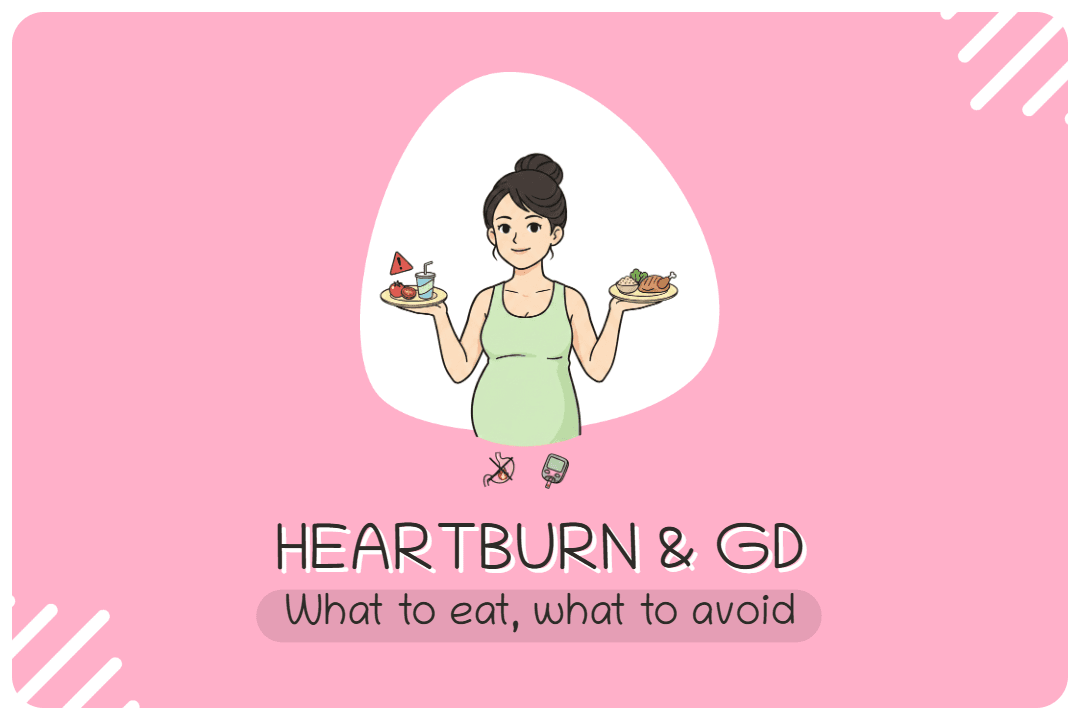
Heartburn in pregnancy is already annoying. Add gestational diabetes on top, and suddenly it can feel like everything either spikes your blood sugar, triggers reflux, or both.
This post is a practical “yes list + swap list” you can use for meal planning when you’re dealing with heartburn (acid reflux/GERD) and trying to keep your blood sugar levels in a healthier range.
Heartburn (acid reflux) happens when stomach acid moves up into the esophagus. In pregnancy, hormones and pressure on the belly can relax the lower esophageal sphincter, making reflux more likely. Some certain foods (especially acidic foods and fatty foods) can make symptoms worse.
With gestational diabetes mellitus (GDM), you’re also trying to avoid big spikes from excess sugar and too many carbs, and you might be doing some degree of carb counting or portion measuring.
So the goal becomes:
Choose heartburn-friendly foods
Keep carbohydrates steady and paired with protein + healthy fats
Avoid skipping meals (because that can backfire for both reflux and glucose)
Everyone’s triggers are different (some pregnant women tolerate tomatoes fine; others can’t look at a tomato-based product without regret). But these are common “safe-ish” building blocks.
Lean proteins and other protein foods can help keep your blood sugar steadier and may be less reflux-triggering than a high-fat, fried meal.
Try:
Chicken or turkey
Lean ground meat
Fish (if tolerated)
Tofu
Eggs and egg whites
Greek yogurt or cottage cheese (if tolerated)
Julija note: If dairy makes your reflux worse, don’t force it. There are plenty of ways to get protein without milk/cheese.
Non-starchy vegetables (especially green vegetables) are a go-to for both reflux-friendly meals and steadier glucose.
Try:
Spinach, lettuce, cucumber
Zucchini, green beans
Bell peppers (some people tolerate, some don’t)
Carrots (portion-friendly)
Tip: Some women find cooked veggies easier than raw salads when heartburn is flaring.
You don’t need to go “no carb” (and you shouldn't!). You just want healthy carbohydrates in a measured serving size, paired with protein.
Options many people tolerate:
Quinoa
Whole grains in general
Whole grain breads (or half a serving)
Oats (trial and error)
English muffins (often half works better than a whole)
Cooked rice (try to pick lower GI rice like basmati or wild) in a smaller portion (paired well)
Starchy vegetables like winter squash or sweet potatoe (portion control matters)
Beans (some tolerate well; for others, they increase reflux/bloating)
Julija note: The “best” carb is the one you tolerate and can pair. A small portion of rice with chicken + veggies can be a better real-life choice than a “perfect” carb that gives you reflux.
A little fat helps slow digestion and can support steadier glucose, but high fat foods can also worsen reflux for some people.
Try small portions of:
Olive oil
Avocado (if tolerated)
Nuts
Nut butter (thin layer)
Common reflux triggers:
Tomato based products (tomato sauce, salsa)
Citrus fruits (orange, grapefruit) and other acidic foods
Fruit juices
Soft drinks
Fried/greasy foods (hello french fries and the greasy burger)
Very large meals (even if the foods are “healthy”)
GD angle:
Juice/soda = fast sugar → faster spike
Fried/high-fat meals can cause delayed digestion and “surprise” later spikes
If you’re doing meal planning with gestational diabetes, the simplest structure is:
Carbohydrates (measured)
Protein (always)
Healthy fats (small amount)
Vegetables (especially non-starchy)
Helpful rules when heartburn is bad:
Choose smaller meals more often
Don’t lie down right after eating
Avoid huge portions (portion sizes matter as much as the food)
Julija note: Skipping meals can sometimes make you ravenous later, which leads to a bigger meal… which leads to worse reflux… which leads to stress… which can also nudge blood sugar up. It’s a loop.
Use these as mix-and-match snack ideas:
Greek yogurt + a few berries + a sprinkle of nuts
Cheese + whole grain crackers (measured)
Egg bites/egg muffins + a small carb you tolerate (ex. low-GI fruit, popcorn, crackers, toast, etc.)
Nut butter on toast
Hummus (beans) + veggies (ex. cucumber, bell peppers)
Cottage cheese + berries (if tolerated)
Best first choice: water.
If you need something else:
Low-sugar electrolytes (or dilute them) — more on this topic in our Electrolytes guide for gestational diabetes
Unsweetened tea (if tolerated)
Limit/avoid if they worsen symptoms:
Soft drinks
Fruit juices
Very acidic drinks
About artificial sweeteners: some people tolerate them fine; others find they increase reflux. Your body gets the final vote.
This is just a template — your clinic’s carb targets may differ.
Breakfast: eggs/egg whites + half English muffin + cooked spinach
Snack: Greek yogurt + berries + nuts
Lunch (lunchbox): turkey + cucumber + whole grain crackers + a fruit portion
Snack: cheese + crackers or hummus + veggies
Dinner: chicken + non-starchy vegetables + small portion of cooked rice
Optional bedtime snack (if it helps your fasting): the "best" type is very individual (read more about Best bedtime snacks for gestational diabetes).
You’re not failing if your “perfect gestational diabetes meal” is suddenly a reflux nightmare. Your job is to find the combination that helps you feel okay and keeps your blood sugar in a safer range — one meal at a time.
1. Can heartburn affect blood sugar?
Heartburn itself doesn’t directly raise blood sugar, but poor sleep, stress, and not eating regularly because you feel awful can make blood sugar harder to manage.
2. Is GERD the same as heartburn?
GERD (gastroesophageal reflux disease) is a more persistent form of acid reflux. Many pregnant women have reflux symptoms even if they don’t have a formal GERD diagnosis.
3. Do I need to avoid all fatty foods with gestational diabetes and heartburn?
Not necessarily. Healthy fats can support steadier blood sugar, but large portions of high-fat foods can worsen reflux for some people. Smaller portions are often the sweet spot.
4. Are whole grains always better for gestational diabetes?
Often, whole grains and complex carbohydrates can reduce glucose spikes compared to refined carbs — but tolerance varies. Portion control and pairing with protein matters most.
5. What if tomatoes, citrus, or beans are “healthy” but they trigger my reflux?
Then they’re not healthy for you right now. Choose other healthy foods you tolerate (non-starchy vegetables, lean proteins, gentler carbs) and come back to triggers later.
6. Should I skip meals if I have heartburn?
Usually no. Skipping meals can lead to bigger meals later, which may worsen reflux and make blood sugar harder to manage. Smaller, more frequent meals tend to work better.
7. When should I talk to my provider or a registered dietitian?
If you’re having severe reflux, weight loss, trouble keeping food down, or you’re unsure how to balance carbs/protein for your targets, a registered dietitian or your care team can help tailor a plan.
Get a Free 20-Day Shopping List