

If you’ve just been diagnosed with gestational diabetes, carb counting can feel like suddenly you’re expected to become a human calculator… while pregnant… and tired… and already doing a million things.
Here’s the good news: carb counting is just a tool. It’s not a moral scorecard, and it’s not the only way to eat well in pregnancy. But it can help you understand how different foods affect your blood sugar (aka blood glucose)—especially in the early “data collection” phase.
Julija note: If carb counting makes you spiral, it's okay. We can use simpler tools like the plate method + consistent meals and still get great blood sugar levels.
Carbohydrate counting means tracking the grams of carbohydrates you eat at meals and snacks—because carbohydrates impact blood glucose levels more than protein and fat.
Carbohydrates are made up of sugar, starch, and fiber. In your body, carbs break down into glucose (sugar in the bloodstream). With gestational diabetes, pregnancy hormones increase insulin resistance, so your body may not handle the same amount of carbs the way it did before.
Not always.
Some pregnant women do best with:
Full carb counting (especially if using mealtime insulin)
A “consistent carbs” approach (similar carb amount at each meal)
The plate method (portion size + balance)
If you’re on insulin, carb counting often becomes more important because insulin doses may be matched to total carbs.
Carb targets vary by clinic, country, and your personal blood sugar response.
A common starting point many educators use:
Main meals: aim for 30–60g of carbs
Snacks: 15 of carbs
You may also hear frameworks like:
Breakfast: 15–45g
Lunch/dinner: 45–60g
Snacks: 15–30 of carbs
And yes—pregnancy needs carbs. Many guidelines reference a minimum of 175 grams of carbohydrates per day for fetal development.
The key: your meter (or CGM) is your feedback. Your “right” carb amount is the one that keeps you in your healthy range. You might need to pull back in the morning and compensate later in the day, either lunch or dinner could be easier for your body, etc.
For gestational diabetes, most providers want you to count total carbohydrate (aka total carbs)—not net carbs.
Why? Because your blood sugar response is driven by the total carbohydrate content, and “net” math can get messy fast.
Look for:
Serving size (this is huge)
Total carbohydrate (grams)
Optional: fiber and added sugar
A serving of food may not be your portion size. If you eat double the serving, you’re eating double the grams of carbs.
Julija note: The UK traffic light system doesn’t show total carbohydrates clearly—so always check the full nutrition label.
Foods without labels still have carbs, for example:
fruit
bread
brown rice
dried beans
starchy vegetables like potatoes (yes, even a small baked potato)
Green vegetables (like leafy green vegetables) tend to be lower-carb and higher fiber.
If counting every gram makes you miserable, try this:
Keep breakfast carbs similar day-to-day
Keep lunch carbs similar day-to-day
Keep dinner carbs similar day-to-day
Then adjust based on your readings.
If carb counting makes you spiral, the plate method is a simpler way to build GD-friendly meals without tracking every gram.
A basic starting point:
½ plate: non-starchy veggies
¼ plate: protein
¼ plate: carbs/starch
Plus a little healthy fat (olive oil, avocado, nuts/seeds, cheese).
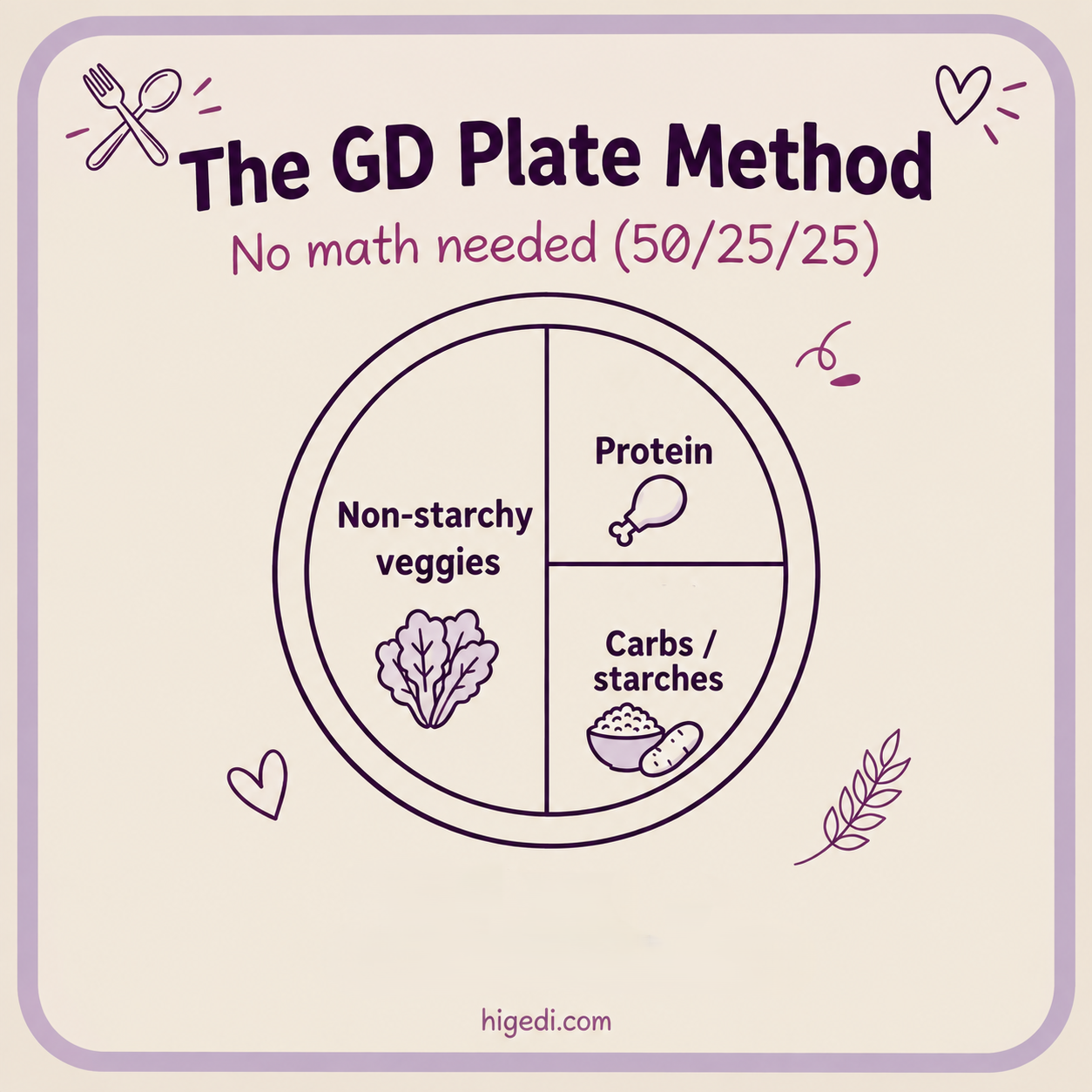
Why it works: protein + fat + fiber slow digestion, so carbs hit your blood sugar more gently.
Julija note: Breakfast is often the trickiest (more insulin resistance in the morning), so you may need a smaller carb portion at breakfast and “save” more carbs for lunch/dinner. Your meter is the boss.
You can eat the same amount of carbs and still get different results. That’s not you doing it wrong—gestational diabetes is just like that.
Blood sugar can change based on:
Time of day (many women are more insulin resistant in the morning)
Sleep, stress, illness
Movement after meals
What you paired the carbs with
And on top of that, there’s also a built-in margin of error with glucose testing. Even if you do everything the same, meters can naturally vary a bit from reading to reading (often up to +/-15%). So don’t panic over one “random” number — look for patterns over a few days. If you want a deeper explanation and what to do when readings don’t match, read our full guide on Why different fingers can give different blood sugar readings.
If carbs are the spark, protein and fat are the brakes.
Pairing carbs with protein and fat (and fiber) can slow digestion so glucose doesn’t rise rapidly.
Examples:
bread + eggs + olive oil drizzle on salad
brown rice + chicken + roasted veggies
fruit + Greek yogurt (protein) + nuts (healthy fats and fiber)
A few squares of dark chocolate after a balanced meal (not on an empty stomach)
Glycaemic index (GI) describes how quickly carbs raise blood sugar.
Low GI foods tend to raise blood glucose levels more slowly
High GI foods can spike faster
But GI isn’t the whole story—portion size, cooking method, and what you eat with it matter.
It’s so tempting to skip a meal when you’re scared of high numbers. But with gestational diabetes, skipping meals can sometimes create a blood sugar rollercoaster instead of “fixing” things.
Skipping meals can:
Make you overly hungry later, which makes it harder to choose a balanced meal
Lead to bigger carb loads at once (because you’re starving and just need food now)
Trigger bigger spikes because the next meal hits harder when you’ve been running on empty
Sometimes worsen your overall patterns, even if you didn’t eat anything
Why it can backfire:
If your blood sugar stays low (or you go too long without eating), your body may try to protect you by releasing stored glucose into your bloodstream. So you can end up with a higher reading later… even though you didn’t eat.
For many GD mamas, smaller, more frequent meals/snacks (with protein + fat + fiber) can help keep things steadier and prevent that crash-then-spike cycle.
Julija note: If you’re skipping meals because nausea/food aversions are brutal, it's understandable — do what you can, and aim for something small and balanced when possible.
Use this as a starting point:
Pick 1 carb source
Keep the portion consistent
Add protein
Add healthy fats
Add fiber (vegetables/whole grains/beans)
The fastest way to learn your body is pairing food notes with glucose checks.
A simple routine:
Eat your meal
Check blood glucose at your clinic’s recommended timing
Note the meal + carb amount
Over time you’ll see patterns in how different foods affect your blood sugar levels.
A registered dietitian or diabetes educator can be incredibly helpful—especially if:
You’re unsure how many carbs you need
You’re losing weight unintentionally or worried about weight gain
You’re on insulin and need carb-to-insulin matching
Your numbers are high despite “doing everything right”
Carb counting is a tool for food choices, not a punishment.
Aim for:
Consistency (not perfection)
Balanced meals (carbs + protein + fat)
Enough carbs for pregnancy
A plan that supports your mental health
Julija note: GD is not a willpower issue. It’s placenta hormones + insulin resistance. You’re doing the work—and that matters.
1. How many carbs should I eat per meal with gestational diabetes?
Many start around 30–60g total carbs per main meals, but targets vary. Your blood sugar readings help personalize it.
2. Should I count total carbs or net carbs?
Most gestational diabetes plans use total carbohydrate from the nutrition label.
3. Do low GI foods guarantee good numbers?
Not always. Low GI foods often help, but portion size and pairing with protein/fat matter too.
4. Can I eat carbs with gestational diabetes?
Yes. Eating carbs is part of a healthy pregnancy diet. The goal is the right amount, balanced with protein and healthy fats.
5. Why do my numbers change even when I eat the same foods?
Time of day, sleep, stress, activity, and hormone shifts can all change how your body responds.
Get a Free 20-Day Shopping List